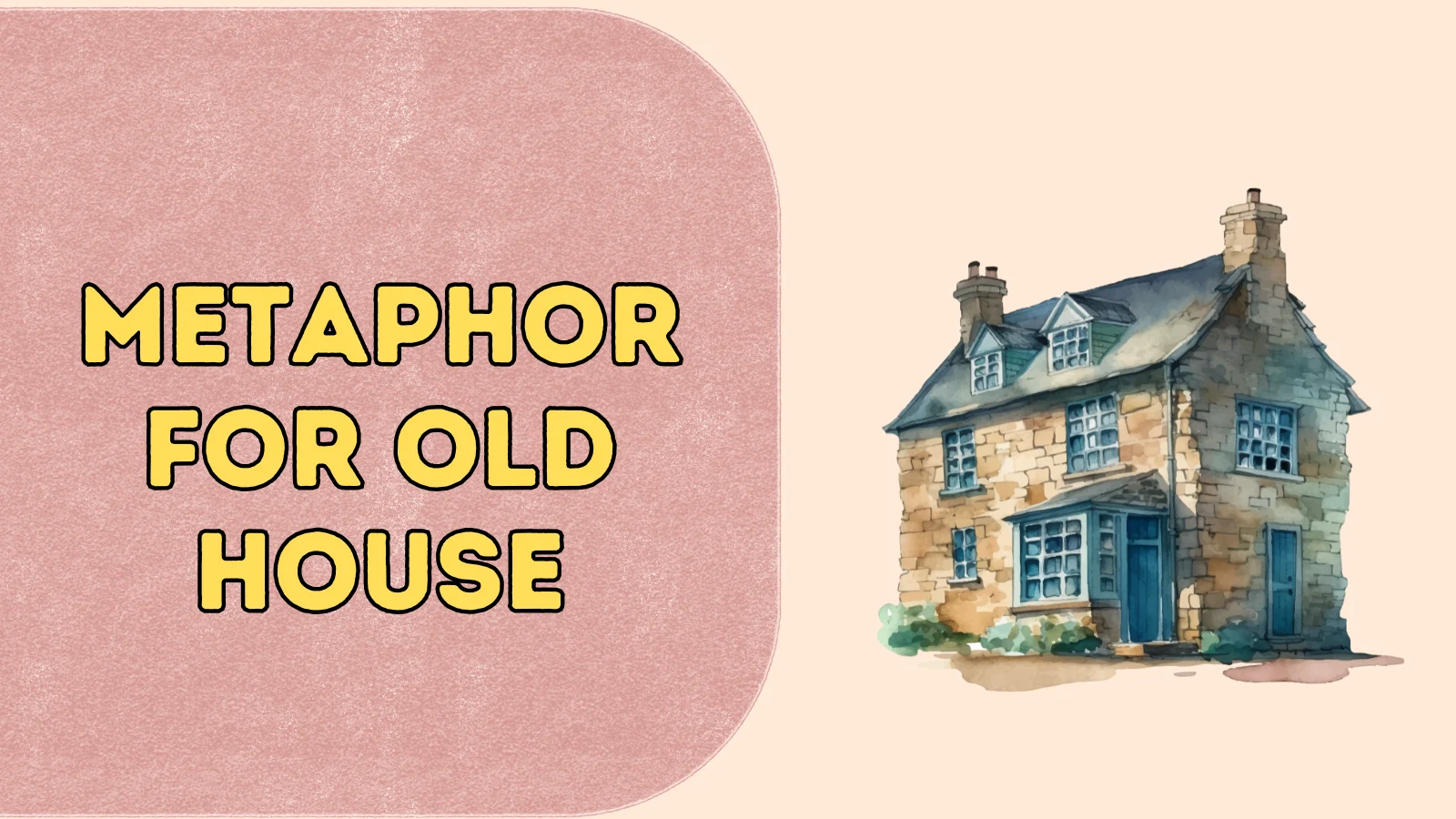
A metaphor for old house can transform a simple description into vivid, memorable writing. Instead of merely saying a house is old, a metaphor gives it personality, history, and emotion. Whether you’re writing a story, poem, essay, or descriptive paragraph, the right metaphor helps readers picture the building and feel its atmosphere.
In this guide, you’ll discover original metaphors for old houses, learn what each one means, when to use it, and how to choose the best metaphor for your writing.
Key Takeaways
- Metaphors make old houses feel alive and meaningful.
- Different metaphors convey different emotions, such as nostalgia, mystery, loneliness, or resilience.
- Choosing a metaphor depends on your audience, tone, and writing purpose.
- Fresh, original metaphors leave a stronger impression than common clichés.
What Is a Metaphor?
A metaphor is a figure of speech that describes one thing as another to highlight a shared quality. Instead of saying something is like another thing, a metaphor treats it as if it truly is that thing.
For example:
Literal: The house was very old.
Metaphor: The house was a forgotten diary.
The metaphor suggests the house holds memories and untold stories, making the description more engaging than a simple statement.
Why Writers Use Metaphors for Old Houses
An old house is more than bricks and timber. It often symbolizes history, memories, endurance, mystery, or the passage of time. Metaphors help readers connect emotionally with these ideas instead of merely observing the building.
They can make an old house seem:
- Warm and welcoming
- Lonely and abandoned
- Haunted and mysterious
- Wise and enduring
- Beautiful despite its age
- Full of forgotten stories
How the Meaning Changes with Context
The same old house can represent different ideas depending on your story.
- In a family story, it may symbolize cherished memories.
- In a horror story, it may become a place of secrets.
- In historical writing, it may represent the endurance of the past.
- In poetry, it may reflect the aging process or the passage of time.
Choosing imagery that matches your purpose makes your writing more effective.
Everyday Metaphors for an Old House
A Forgotten Diary
Metaphor: The old house was a forgotten diary.
Example: The old house was a forgotten diary waiting for someone to read its pages.
Meaning: The house holds memories and untold stories.
Best Situation: Family history, nostalgic writing.
Tone: Warm, reflective.
A Wrinkled Face
Metaphor: The house was a wrinkled face smiling through time.
Example: The house stood like a wrinkled face smiling through time.
Meaning: Emphasizes age, experience, and character.
Best Situation: Descriptive essays, storytelling.
Tone: Gentle, nostalgic.
A Sleeping Giant
Metaphor: The old house was a sleeping giant.
Example: At the end of the lane, the old house was a sleeping giant beneath the trees.
Meaning: Suggests quiet strength and hidden potential.
Best Situation: Fiction, adventure stories.
Tone: Dramatic.
Nostalgic Metaphors for an Old House
A Treasure Chest of Memories
Metaphor: The house was a treasure chest of memories.
Example: Every room felt like a treasure chest of memories waiting to be opened.
Meaning: Represents precious experiences from the past.
Best Situation: Memoirs, family stories.
Tone: Heartfelt.
A Time Capsule
Metaphor: The old house was a time capsule.
Example: Walking inside felt like opening a time capsule untouched for decades.
Meaning: Preserves moments from another era.
Best Situation: Historical writing.
Tone: Reflective.
An Old Photograph
Metaphor: The house was an old photograph fading gently.
Example: The weathered farmhouse was an old photograph fading gently with each passing year.
Meaning: Symbolizes treasured memories slowly disappearing.
Best Situation: Emotional writing.
Tone: Sentimental.
Mysterious Metaphors for an Old House
A Keeper of Secrets
Metaphor: The house was a keeper of secrets.
Example: The abandoned mansion was a keeper of secrets hidden behind cracked walls.
Meaning: Suggests mystery and hidden history.
Best Situation: Mystery novels, gothic fiction.
Tone: Suspenseful.
A Silent Witness
Metaphor: The old house was a silent witness.
Example: For generations, the old house had been a silent witness to laughter and loss.
Meaning: The house has observed countless events without speaking.
Best Situation: Historical fiction.
Tone: Thoughtful.
A Locked Storybook
Metaphor: The house was a locked storybook.
Example: Every creaking floorboard made the house feel like a locked storybook.
Meaning: Hints at stories waiting to be discovered.
Best Situation: Children’s stories, mystery writing.
Tone: Curious.
Nature-Inspired Metaphors for an Old House
An Ancient Oak
Metaphor: The house was an ancient oak.
Example: The farmhouse stood like an ancient oak rooted in generations of history.
Meaning: Represents endurance and strength.
Best Situation: Rural descriptions.
Tone: Respectful.
A Weathered Cliff
Metaphor: The house was a weathered cliff.
Example: Years of storms had turned the old house into a weathered cliff.
Meaning: Shows resilience despite hardship.
Best Situation: Descriptive writing.
Tone: Strong.
A Winter Tree
Metaphor: The old house was a winter tree.
Example: The empty farmhouse was a winter tree standing quietly against the sky.
Meaning: Suggests loneliness and quiet beauty.
Best Situation: Poetry.
Tone: Melancholic.
Literary and Poetic Metaphors for an Old House
A Fading Song
Metaphor: The old house was a fading song.
Example: Every loose floorboard echoed like a fading song.
Meaning: Beauty that slowly disappears with time.
Best Situation: Poetry.
Tone: Lyrical.
A Candle Near Its End
Metaphor: The house was a candle near its end.
Example: Though worn by time, the old house was a candle near its end, still giving light.
Meaning: Suggests dignity and perseverance despite age.
Best Situation: Reflective essays.
Tone: Emotional.
A Library Without Readers
Metaphor: The old house was a library without readers.
Example: Empty rooms made the house feel like a library without readers.
Meaning: Full of forgotten stories and neglected history.
Best Situation: Literary writing.
Tone: Thought-provoking.
Metaphor vs. Simile
What Is the Difference?
A metaphor directly states that one thing is another, while a simile compares two things using words such as like or as.
Metaphor: The old house was a forgotten diary.
Simile: The old house was like a forgotten diary.
Metaphors generally create stronger, more vivid imagery because they make the comparison feel immediate.
How to Choose the Right Metaphor
Match the Mood
Choose warm imagery for nostalgic writing and darker imagery for mystery or horror.
Think About Your Audience
Simple metaphors work well for students and general readers, while more symbolic metaphors suit poetry and literary fiction.
Stay Consistent
If your story has a hopeful tone, avoid metaphors that suggest fear or despair unless the context changes naturally.
Expert Writing Tips
Focus on One Strong Image
A single clear metaphor is usually more memorable than several mixed together.
Draw Inspiration from Real Life
Nature, music, history, books, and everyday objects often create powerful and relatable metaphors.
Avoid Clichés
Instead of relying on familiar expressions, look for fresh images that reflect the unique role of the house in your story.
Show, Don’t Explain
Let the metaphor evoke emotion naturally rather than immediately explaining every detail.
Common Mistakes
Using Mixed Metaphors
Combining unrelated images can confuse readers.
Less Effective: The old house was a ship climbing a mountain.
Better: The old house was an ancient oak weathering every storm.
Choosing the Wrong Tone
A playful metaphor may not fit a serious historical story. Make sure the imagery supports the mood.
Overusing Metaphors
Too many metaphors in one paragraph can distract readers. Use them where they have the greatest impact.
Frequently Asked Questions
What is a metaphor for an old house?
A metaphor for an old house is a creative comparison that describes the house as something else, such as a forgotten diary, a silent witness, or an ancient oak, to express its age, history, or character.
What are some powerful metaphors for an old house?
Strong metaphors include a time capsule, a keeper of secrets, a library without readers, a fading song, and a treasure chest of memories.
Why do writers use metaphors for old houses?
They help readers imagine the house more vividly, create emotion, and reveal themes such as memory, resilience, mystery, or the passage of time.
What is the difference between a metaphor and a simile?
A metaphor says something is another thing, while a simile compares two things using words like like or as.
How can I create my own metaphor for an old house?
Think about the feeling you want the house to convey, then compare it to something that shares that quality. For example, if the house represents forgotten memories, you might describe it as a dusty scrapbook or an unopened letter from the past.
Conclusion
A well-crafted metaphor for old house does more than describe an aging building—it reveals its personality, history, and emotional significance. Whether you want to express nostalgia, mystery, resilience, or quiet beauty, choosing an original metaphor can make your writing more vivid and memorable. By matching the metaphor to your tone, audience, and purpose, you’ll create descriptions that stay with readers long after they’ve finished reading.

I Am Alex Gard.I’m passionate about language, creative writing, and figurative expressions. Through SmartMetaphors, I help readers discover meaningful metaphors, similes, and literary devices to make their writing more engaging and impactful.