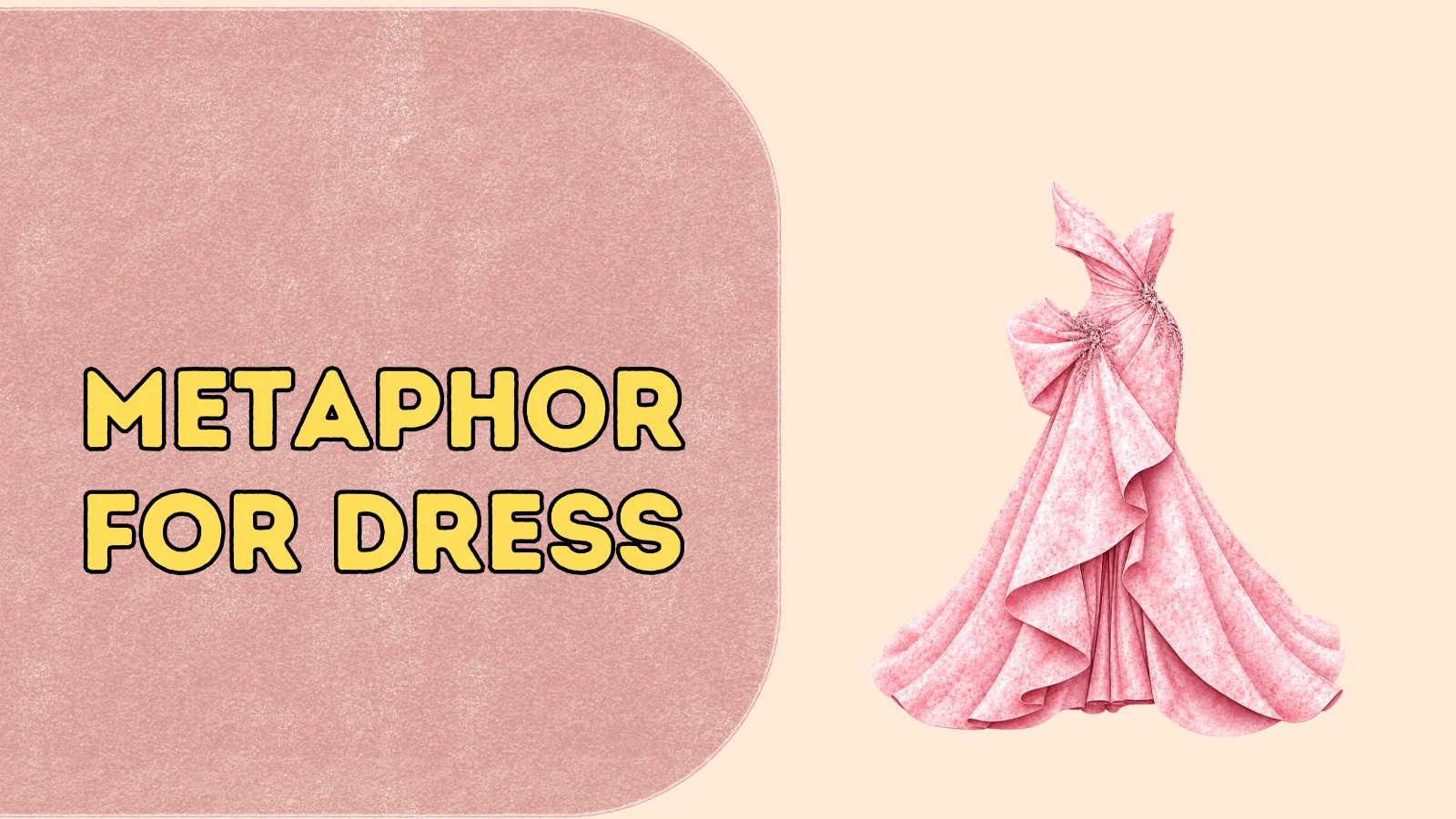
A metaphor for dress can transform a simple description of clothing into vivid, expressive language. Instead of merely describing what someone wears, metaphors reveal personality, emotions, confidence, elegance, or identity through imaginative comparisons. Whether you’re writing a novel, poem, speech, essay, or social media caption, the right metaphor makes your writing more engaging and memorable.
In this guide, you’ll discover original metaphors for dresses, learn what each one means, understand when to use it, and gain practical tips for choosing the perfect metaphor for different writing situations.
Key Takeaways
- A dress metaphor compares a dress to another object or idea to express deeper meaning.
- Different metaphors convey different emotions, from elegance and romance to confidence and mystery.
- The best metaphor depends on your audience, context, and writing style.
- Original metaphors make descriptions more vivid and memorable.
- Context is just as important as creativity when selecting a metaphor.
What Is a Metaphor?
A metaphor is a figure of speech that describes one thing as if it were another, highlighting a shared quality without using words like as or like.
For example:
Literal: She wore a beautiful dress.
Metaphor: Her dress was a river of moonlight.
The metaphor paints a richer picture, helping readers imagine the dress’s beauty and elegance.
Why Writers Use Dress Metaphors
A dress is often more than fabric. It can symbolize confidence, celebration, culture, love, innocence, power, or transformation. Metaphors allow writers to express these deeper meanings in a creative and emotionally engaging way.
They help readers:
- Visualize clothing more vividly.
- Understand a character’s personality.
- Feel the mood of a scene.
- Remember descriptions long after reading them.
How a Dress Can Symbolize Different Emotions
The same dress can represent different ideas depending on the story.
| Emotion | What the Dress May Symbolize |
|---|---|
| Confidence | Strength and self-belief |
| Romance | Love and affection |
| Joy | Celebration and happiness |
| Mystery | Secrets and intrigue |
| Elegance | Grace and sophistication |
| Freedom | Self-expression and individuality |
Everyday Dress Metaphors
A River of Moonlight
Metaphor: Her dress was a river of moonlight.
Example: Her dress was a river of moonlight flowing across the ballroom.
Meaning: Represents graceful beauty and soft elegance.
Best Situation: Formal events, weddings, evening scenes.
Tone: Elegant, poetic.
A Blooming Garden
Metaphor: Her dress was a blooming garden.
Example: Her floral dress was a blooming garden that brightened the entire room.
Meaning: Symbolizes freshness, happiness, and natural beauty.
Best Situation: Spring fashion, outdoor celebrations.
Tone: Cheerful.
A Warm Sunrise
Metaphor: Her dress was a warm sunrise.
Example: The yellow dress was a warm sunrise on a cloudy afternoon.
Meaning: Suggests optimism and positive energy.
Best Situation: Casual storytelling, descriptive writing.
Tone: Uplifting.
A Whisper of Silk
Metaphor: The dress was a whisper of silk.
Example: The dress was a whisper of silk that floated with every step.
Meaning: Emphasizes softness and delicacy.
Best Situation: Fashion descriptions, romantic writing.
Tone: Gentle.
A Painted Canvas
Metaphor: Her dress was a painted canvas.
Example: Every embroidered detail made her dress a painted canvas.
Meaning: Highlights creativity and artistic craftsmanship.
Best Situation: Fashion articles, artistic descriptions.
Tone: Creative.
Elegant and Romantic Dress Metaphors
A Crown Woven into Fabric
Metaphor: Her dress was a crown woven into fabric.
Example: On her wedding day, her dress was a crown woven into fabric.
Meaning: Represents dignity, beauty, and importance.
Best Situation: Weddings, formal occasions.
Tone: Regal.
A Love Letter Sewn with Thread
Metaphor: Her dress was a love letter sewn with thread.
Example: Every stitch made the dress a love letter sewn with thread.
Meaning: Symbolizes affection, care, and emotional value.
Best Situation: Romantic stories.
Tone: Emotional.
A Dancing Melody
Metaphor: Her dress was a dancing melody.
Example: As she twirled, her dress became a dancing melody.
Meaning: Suggests movement, rhythm, and elegance.
Best Situation: Dance performances, celebrations.
Tone: Graceful.
A Bouquet That Never Fades
Metaphor: Her dress was a bouquet that never fades.
Example: The embroidered flowers made her dress a bouquet that never fades.
Meaning: Represents timeless beauty.
Best Situation: Romantic descriptions.
Tone: Poetic.
A Soft Cloud
Metaphor: The dress was a soft cloud.
Example: The flowing gown was a soft cloud drifting across the stage.
Meaning: Expresses lightness and comfort.
Best Situation: Fashion writing, fairy tales.
Tone: Dreamy.
Powerful and Dramatic Dress Metaphors
A Suit of Confidence
Metaphor: Her dress was a suit of confidence.
Example: Before stepping on stage, her dress became a suit of confidence.
Meaning: Shows strength and self-assurance.
Best Situation: Public speaking, achievements.
Tone: Empowering.
A Flame Wrapped in Fabric
Metaphor: Her dress was a flame wrapped in fabric.
Example: The bright red gown was a flame wrapped in fabric.
Meaning: Represents passion, boldness, and energy.
Best Situation: Dramatic scenes, fashion editorials.
Tone: Bold.
A Banner of Courage
Metaphor: Her dress was a banner of courage.
Example: She walked into the interview wearing a banner of courage.
Meaning: Symbolizes confidence despite fear.
Best Situation: Inspirational writing.
Tone: Motivational.
A Shield Made of Elegance
Metaphor: The dress became a shield made of elegance.
Example: Her elegant gown became a shield made of elegance during the formal event.
Meaning: Beauty used as confidence and protection.
Best Situation: Character development.
Tone: Sophisticated.
A Spark Waiting for the Wind
Metaphor: Her dress was a spark waiting for the wind.
Example: On the dance floor, her dress became a spark waiting for the wind.
Meaning: Represents hidden excitement ready to shine.
Best Situation: Celebrations.
Tone: Energetic.
Nature-Inspired Dress Metaphors
A Waterfall of Petals
Metaphor: Her dress was a waterfall of petals.
Example: The layered gown looked like a waterfall of petals.
Meaning: Symbolizes flowing beauty and softness.
Best Situation: Wedding writing.
Tone: Romantic.
A Butterfly’s Dream
Metaphor: Her dress was a butterfly’s dream.
Example: The colorful dress was a butterfly’s dream dancing through the garden.
Meaning: Represents freedom and delicate beauty.
Best Situation: Spring themes, children’s stories.
Tone: Whimsical.
A Field of Wildflowers
Metaphor: Her dress was a field of wildflowers.
Example: Her floral sundress was a field of wildflowers under the summer sun.
Meaning: Symbolizes natural charm and joy.
Best Situation: Lifestyle blogs, descriptive writing.
Tone: Fresh.
A Night Sky
Metaphor: Her dress was the night sky.
Example: Covered in tiny crystals, her gown became the night sky.
Meaning: Suggests mystery and breathtaking beauty.
Best Situation: Evening events.
Tone: Dramatic.
A Gentle Breeze
Metaphor: The dress was a gentle breeze.
Example: Its flowing fabric made the dress a gentle breeze across the beach.
Meaning: Represents effortless elegance.
Best Situation: Travel writing, fashion descriptions.
Tone: Peaceful.
Literary and Poetic Dress Metaphors
A Page from a Fairy Tale
Metaphor: Her dress was a page from a fairy tale.
Example: As she entered the grand hall, her dress was a page from a fairy tale.
Meaning: Suggests magical beauty and timeless elegance.
Best Situation: Fairy tales, fantasy writing, weddings.
Tone: Enchanting.
A Symphony Woven in Thread
Metaphor: Her dress was a symphony woven in thread.
Example: Every layer moved together, making her dress a symphony woven in thread.
Meaning: Represents harmony, grace, and artistic beauty.
Best Situation: Fashion features, descriptive storytelling.
Tone: Artistic.
A Poem Without Words
Metaphor: Her dress was a poem without words.
Example: The simple white gown was a poem without words that everyone understood.
Meaning: Expresses beauty that speaks through appearance rather than language.
Best Situation: Romantic writing, fashion descriptions.
Tone: Elegant, emotional.
A Window to Her Soul
Metaphor: Her dress was a window to her soul.
Example: The handmade embroidery made her dress a window to her soul.
Meaning: Suggests that clothing reflects personality and emotions.
Best Situation: Character descriptions, memoirs.
Tone: Reflective.
A Dream Stitched Together
Metaphor: Her dress was a dream stitched together.
Example: Every delicate detail made the wedding gown a dream stitched together.
Meaning: Represents imagination becoming reality.
Best Situation: Weddings, celebrations.
Tone: Inspirational.
Funny Dress Metaphors
A Walking Gift Wrap
Metaphor: His shiny outfit was walking gift wrap.
Example: At the holiday party, his suit was walking gift wrap.
Meaning: Describes clothing that is overly flashy or eye-catching.
Best Situation: Humorous storytelling.
Tone: Playful.
A Disco Ball with Sleeves
Metaphor: Her dress was a disco ball with sleeves.
Example: Covered in sequins, her dress was a disco ball with sleeves.
Meaning: Refers to clothing that sparkles from every angle.
Best Situation: Parties, comedy, social media.
Tone: Funny.
A Parade Looking for a Street
Metaphor: His colorful outfit was a parade looking for a street.
Example: Everyone smiled because his outfit was a parade looking for a street.
Meaning: Describes bold, attention-grabbing clothing.
Best Situation: Casual humor.
Tone: Lighthearted.
A Firework Wrapped in Fabric
Metaphor: Her dress was a firework wrapped in fabric.
Example: The bright neon dress was a firework wrapped in fabric.
Meaning: Suggests clothing that immediately grabs attention.
Best Situation: Fashion blogs, humorous descriptions.
Tone: Energetic.
A Rainbow That Missed the Sky
Metaphor: His outfit was a rainbow that missed the sky.
Example: With every colour imaginable, his outfit was a rainbow that missed the sky.
Meaning: Describes extremely colourful clothing.
Best Situation: Humorous fashion writing.
Tone: Cheerful.
Professional and Formal Dress Metaphors
A Badge of Confidence
Metaphor: Her dress was a badge of confidence.
Example: Walking into the meeting, her dress was a badge of confidence.
Meaning: Clothing that projects professionalism and self-assurance.
Best Situation: Business writing, interviews.
Tone: Professional.
A Silent Introduction
Metaphor: His suit was a silent introduction.
Example: Before he spoke, his suit was a silent introduction.
Meaning: Highlights how appearance creates a first impression.
Best Situation: Career advice, business communication.
Tone: Sophisticated.
A Signature in Fabric
Metaphor: Her dress was a signature in fabric.
Example: Everyone recognised her unique style because her dress was a signature in fabric.
Meaning: Represents individuality and personal branding.
Best Situation: Fashion journalism, personal branding.
Tone: Refined.
An Armour of Elegance
Metaphor: Her dress was an armour of elegance.
Example: Facing a room full of strangers, her dress became an armour of elegance.
Meaning: Clothing that provides confidence while maintaining grace.
Best Situation: Formal occasions, leadership stories.
Tone: Empowering.
A Bridge Between Style and Confidence
Metaphor: Her dress was a bridge between style and confidence.
Example: The perfectly tailored dress became a bridge between style and confidence.
Meaning: Shows how clothing enhances self-esteem.
Best Situation: Professional fashion writing.
Tone: Encouraging.
Short and Simple Dress Metaphors
A Bloom
Metaphor: Her dress was a bloom.
Example: In the spring sunshine, her dress was a bloom.
Meaning: Symbolizes freshness and beauty.
Best Situation: Beginner writing, simple descriptions.
Tone: Soft.
A Star
Metaphor: Her dress was a star.
Example: The sparkling gown was a star in the ballroom.
Meaning: Represents brilliance and attention.
Best Situation: Everyday creative writing.
Tone: Bright.
A Whisper
Metaphor: The dress was a whisper.
Example: Its soft fabric made the dress a whisper in the wind.
Meaning: Describes delicate and graceful clothing.
Best Situation: Poetry, descriptive writing.
Tone: Gentle.
A Flame
Metaphor: Her red dress was a flame.
Example: She entered the room, and her red dress was a flame.
Meaning: Symbolizes passion, energy, and confidence.
Best Situation: Dramatic scenes.
Tone: Bold.
A Jewel
Metaphor: Her dress was a jewel.
Example: The emerald gown was a jewel among ordinary outfits.
Meaning: Represents rarity, beauty, and elegance.
Best Situation: Fashion writing, celebrations.
Tone: Luxurious.
Metaphor vs. Simile
Metaphors and similes are both figures of speech that make writing more descriptive, but they do so in different ways. Understanding the difference helps you choose the right expression for your audience and purpose.
What Is a Metaphor?
A metaphor makes a direct comparison by saying one thing is another. It creates a stronger, more vivid image because it blends the two ideas together.
Examples:
- Her dress was a river of moonlight.
- His suit was an armour of confidence.
- The gown became a blooming garden.
These examples don’t mean the clothing literally became those things. Instead, they highlight qualities such as elegance, strength, or beauty.
What Is a Simile?
A simile compares two things using words such as like or as. It creates a clear comparison while keeping the two ideas separate.
Examples:
- Her dress shimmered like moonlight.
- His suit was as strong as armour.
- The gown floated like a cloud.
Similes are often easier for beginners to understand, while metaphors usually create a stronger emotional impact.
Metaphor vs. Simile Comparison
| Metaphor | Simile |
|---|---|
| Says one thing is another | Compares using like or as |
| Creates stronger imagery | Creates clearer comparisons |
| Often sounds more poetic | Often sounds more conversational |
| Adds emotional depth | Adds descriptive clarity |
Which One Should You Use?
Use a metaphor when you want your writing to feel powerful, imaginative, or emotionally rich.
Use a simile when you want readers to picture something quickly without making the comparison too dramatic.
For example:
Simple Description: She wore a beautiful dress.
Simile: Her dress shimmered like fresh snow.
Metaphor: Her dress was fresh snow beneath the ballroom lights.
The metaphor feels more immersive because it invites readers to experience the image rather than simply compare it.
How to Choose the Right Metaphor for a Dress
Not every metaphor fits every situation. The best choice depends on your audience, the occasion, and the emotion you want to convey.
Consider Your Audience
Think about who will read your work.
- Children: Use simple and colourful metaphors.
- Students: Choose clear, easy-to-understand imagery.
- Creative readers: Experiment with poetic language.
- Professional audiences: Keep metaphors elegant and relevant.
A simple metaphor often has a greater impact than one that’s overly complex.
Match the Emotion
Every dress can represent a different feeling.
- Joy: A blooming garden
- Confidence: An armour of elegance
- Romance: A love letter sewn with thread
- Mystery: The night sky
- Luxury: A crown woven into fabric
Choose imagery that naturally reflects the emotion in your scene.
Think About the Setting
The surrounding environment can make your metaphor feel more believable.
For example:
- A wedding dress suits metaphors about light, flowers, or dreams.
- A business suit works well with metaphors about confidence, leadership, or strength.
- A summer dress pairs naturally with sunshine, butterflies, gardens, or breezes.
- An evening gown often matches stars, moonlight, or velvet skies.
Matching the metaphor to the setting creates stronger imagery.
Keep the Tone Consistent
The tone of your writing should guide your metaphor choice.
| Tone | Suitable Metaphor |
|---|---|
| Romantic | A love letter sewn with thread |
| Elegant | A river of moonlight |
| Funny | A disco ball with sleeves |
| Inspirational | A badge of confidence |
| Dramatic | A flame wrapped in fabric |
| Peaceful | A gentle breeze |
A humorous metaphor may feel out of place in a serious scene, while an overly dramatic metaphor can distract readers in everyday writing.
Expert Writing Tips
Focus on One Strong Image
The most memorable metaphors usually centre on a single idea.
Instead of writing:
Her dress was a river, a flower, a cloud, and a star.
Choose one image that best captures the feeling.
For example:
Her dress was a river of moonlight flowing through the ballroom.
One clear image is more powerful than several competing ones.
Use Sensory Details
Bring your metaphor to life by appealing to the senses.
Think about:
- Colour
- Movement
- Texture
- Sound
- Light
- Temperature
Instead of saying:
Her dress was beautiful.
Try:
Her dress was a waterfall of silk that caught every beam of light.
Specific details make readers feel present in the scene.
Avoid Overused Comparisons
Common expressions can weaken your writing because readers have seen them many times.
Instead of relying on familiar comparisons, create fresh imagery inspired by nature, music, art, architecture, or everyday life.
Less Original
- A princess.
- A shining star.
- An angel.
More Original
- A melody stitched into silk.
- A sunrise folded into fabric.
- A garden dancing with the wind.
Fresh metaphors leave a stronger impression.
Match the Character
A metaphor should reflect the viewpoint of the person describing the dress.
For example:
- An artist may compare a dress to a painted canvas.
- A musician may describe it as a symphony woven in thread.
- A gardener may see it as a blooming rose.
- A sailor might call it a sail catching the morning breeze.
Tailoring metaphors to the character’s experiences makes your writing feel more authentic.
Revise for Clarity
After writing a metaphor, ask yourself:
- Does it create a clear image?
- Does it match the mood?
- Does it fit the setting?
- Will readers understand it?
- Is it more original than a cliché?
If the answer to any of these questions is “no,” refine the metaphor until it feels natural and meaningful.
Common Mistakes When Using Dress Metaphors
Even a creative metaphor can lose its impact if it doesn’t fit the context or feels forced. Avoid these common mistakes to make your writing stronger and more believable.
Using Overused Metaphors
Some metaphors have become so common that they no longer create a vivid image. While they’re easy to understand, they rarely make your writing memorable.
Overused:
- Her dress was a princess gown.
- She looked like an angel.
- Her dress was a shining star.
Better Alternatives:
- Her dress was a river of moonlight.
- Her gown became a melody stitched into silk.
- Her dress was a garden blooming beneath the evening sky.
Fresh metaphors help readers imagine the scene instead of recalling a familiar phrase.
Mixing Too Many Images
Combining unrelated metaphors in the same sentence can confuse readers.
Confusing:
Her dress was a butterfly, a volcano, and a lighthouse guiding every eye.
The images don’t naturally connect.
Better:
Her dress was a butterfly drifting through a field of flowers.
One clear metaphor creates a stronger and more coherent picture.
Choosing the Wrong Emotional Tone
Your metaphor should match the mood of the scene.
For example, a humorous metaphor might feel out of place during an emotional wedding ceremony.
Less Suitable:
Her wedding dress was a disco ball with sleeves.
More Suitable:
Her wedding dress was a promise woven in lace.
Likewise, a dramatic metaphor may be too intense for a casual afternoon picnic.
Always consider the emotion you want readers to feel.
Being Too Abstract
A metaphor should help readers visualise the dress, not leave them guessing.
Too Abstract:
Her dress was destiny.
Readers may struggle to understand what this means.
More Vivid:
Her dress was a sunrise unfolding across the horizon.
Concrete imagery is easier to picture and creates a stronger emotional response.
Forcing the Comparison
A metaphor should feel natural.
If the comparison has little connection to the dress, it may distract rather than enhance your writing.
Ask yourself:
- Does this image fit the colour, shape, movement, or emotion?
- Would a reader immediately understand the comparison?
- Does it improve the sentence?
If not, choose a more relevant image.
Ignoring the Character’s Perspective
The best metaphors often reflect the experiences and personality of the character making the observation.
For example:
- A painter may describe a dress as a canvas waiting for colour.
- A musician may call it a silent symphony.
- A florist may see a bouquet in motion.
- An architect may describe it as a masterpiece built from fabric.
Matching the metaphor to the narrator’s perspective adds depth and authenticity.
Frequently Asked Questions
What is a metaphor for a dress?
A metaphor for a dress describes it by comparing it directly to something else without using like or as. For example, Her dress was a river of moonlight suggests elegance, movement, and beauty through vivid imagery.
What are some creative metaphors for a dress?
Creative dress metaphors include:
- A river of moonlight
- A blooming garden
- A whisper of silk
- A dream stitched together
- A symphony woven in thread
- A waterfall of petals
- A crown woven into fabric
- A painted canvas
- A gentle breeze
- A promise woven in lace
Each metaphor highlights a different quality, such as elegance, romance, confidence, or creativity.
How do you describe a beautiful dress creatively?
Instead of using simple adjectives like beautiful or pretty, describe the dress through imagery that appeals to the senses.
For example:
- Her dress was a river of moonlight flowing across the ballroom.
- The gown carried the colours of a spring garden.
- Every fold of fabric whispered elegance.
These descriptions help readers picture the dress and feel its atmosphere.
What is the difference between a dress metaphor and a dress simile?
A metaphor states that the dress is something else.
Example: Her dress was a waterfall of petals.
A simile compares the dress using like or as.
Example: Her dress flowed like a waterfall of petals.
Metaphors generally create stronger imagery, while similes provide a clearer and more direct comparison.
Why do writers use metaphors to describe dresses?
Metaphors make descriptions more vivid, memorable, and emotionally engaging. They can reveal a character’s personality, reflect the mood of a scene, and help readers imagine colour, movement, texture, and emotion more clearly than literal descriptions.
How can I create my own dress metaphors?
Start by identifying the dress’s most noticeable quality.
Ask yourself:
- Does it flow?
- Does it sparkle?
- Does it feel delicate?
- Does it command attention?
- Does it remind you of nature, music, light, or art?
Then connect that quality to a familiar image.
For example:
- Flowing → A river
- Sparkling → A sky full of stars
- Soft → A drifting cloud
- Colourful → A blooming garden
- Elegant → A poem without words
The strongest metaphors are simple, relevant, and easy to imagine.
Conclusion
A well-chosen metaphor for dress does more than describe clothing—it reveals emotion, personality, and atmosphere. Whether you’re writing fiction, poetry, fashion content, speeches, or everyday descriptions, the right metaphor transforms ordinary language into memorable storytelling.
The most effective dress metaphors are original, easy to visualise, and suited to the context. Rather than relying on familiar clichés, choose imagery that reflects the dress’s movement, colour, texture, or emotional significance. By matching your metaphor to the scene and your audience, you’ll create writing that feels authentic, expressive, and engaging.

I Am Alex Gard.I’m passionate about language, creative writing, and figurative expressions. Through SmartMetaphors, I help readers discover meaningful metaphors, similes, and literary devices to make their writing more engaging and impactful.