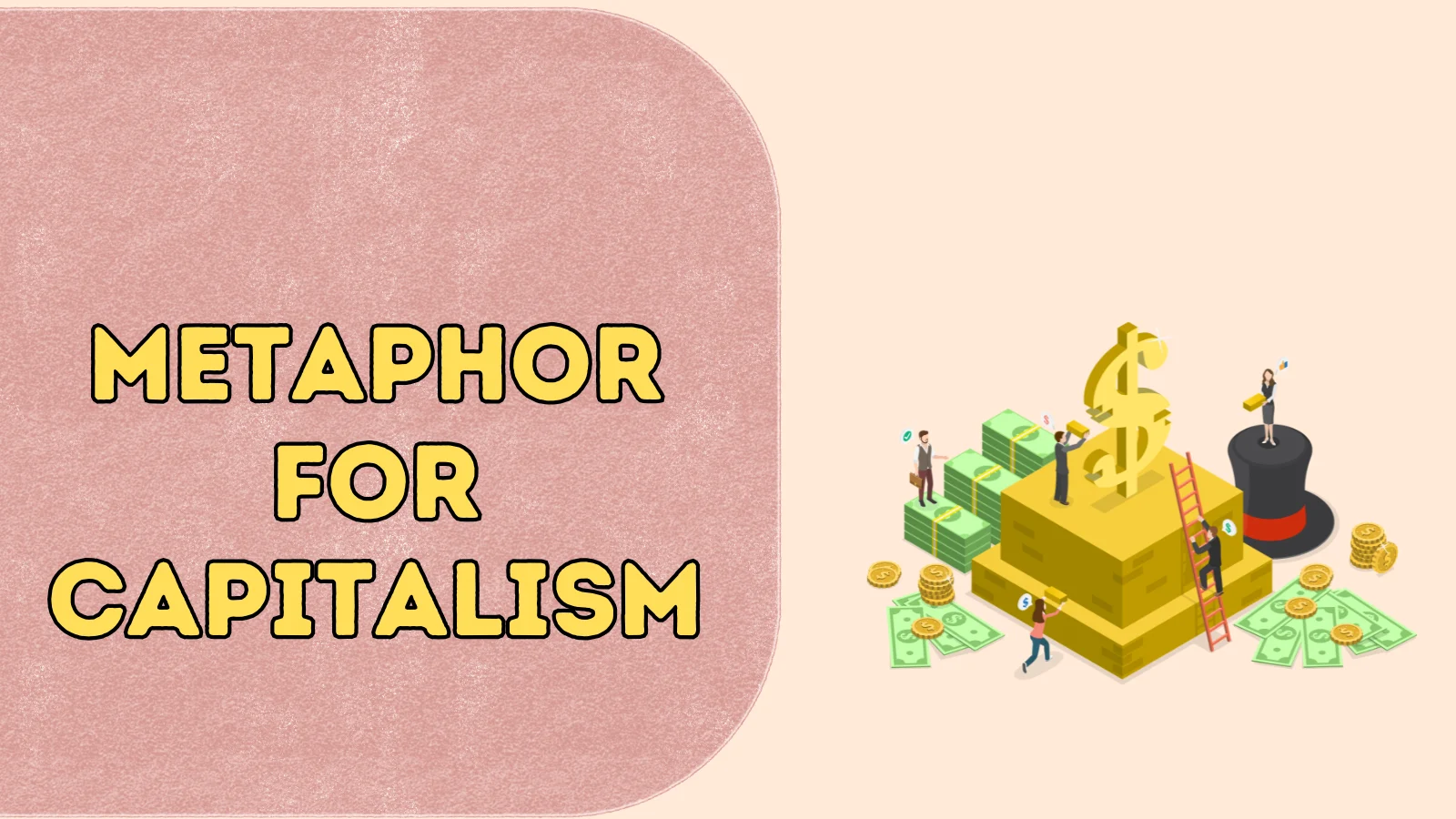
A metaphor for capitalism helps explain a complex economic system through vivid, relatable imagery. Instead of relying on technical definitions, metaphors make ideas like competition, innovation, wealth, risk, and opportunity easier to understand. Whether you’re writing an essay, preparing a speech, creating content, or exploring economics, the right metaphor can make your message more engaging and memorable.
In this guide, you’ll discover creative metaphors for capitalism, learn what each one represents, and find the best situations to use them in your writing.
Key Takeaways
- Metaphors simplify complex economic concepts.
- Different metaphors highlight different aspects of capitalism, such as competition, growth, innovation, or inequality.
- Choosing the right metaphor depends on your audience, purpose, and tone.
- Original metaphors make your writing more memorable than overused comparisons.
What Is a Metaphor?
A metaphor is a figure of speech that describes one thing as if it were another to highlight shared qualities. Instead of saying capitalism is like something, a metaphor states that capitalism is something, encouraging readers to view the concept from a new perspective.
For example:
- Literal: Capitalism is an economic system based on private ownership and markets.
- Metaphor: Capitalism is an engine fueled by ambition.
The second sentence paints a more vivid picture by emphasizing the role of motivation and progress.
Why Writers Use Metaphors for Capitalism
Capitalism is often discussed in economic or political terms, but metaphors make it easier to explain to broader audiences. They can illustrate ideas such as:
- Competition
- Innovation
- Entrepreneurship
- Wealth creation
- Consumer choice
- Economic growth
- Risk and reward
- Market dynamics
A well-chosen metaphor can also encourage readers to think critically by emphasizing one aspect of capitalism without replacing factual analysis.
How Perspective Shapes a Metaphor
Capitalism has many dimensions, so different metaphors highlight different characteristics. One metaphor may focus on creativity and opportunity, while another emphasizes competition or constant change. Consider which aspect best fits your purpose before selecting a metaphor.
Everyday Metaphors for Capitalism
An Engine Fueled by Ambition
Metaphor: Capitalism is an engine fueled by ambition.
Example: Every new startup added fuel to the engine fueled by ambition.
Meaning: Highlights motivation, productivity, and continuous movement.
Best Situation: Business articles, entrepreneurship, education.
Tone: Professional, motivational.
A Marketplace of Dreams
Metaphor: Capitalism is a marketplace of dreams.
Example: For many entrepreneurs, capitalism is a marketplace of dreams where ideas compete for attention.
Meaning: Represents opportunity and the pursuit of personal goals.
Best Situation: Motivational writing, speeches.
Tone: Inspirational.
A Garden of Opportunity
Metaphor: Capitalism is a garden of opportunity.
Example: New businesses flourished in the garden of opportunity.
Meaning: Suggests growth through effort, care, and investment.
Best Situation: Educational content.
Tone: Hopeful.
A Race Without a Finish Line
Metaphor: Capitalism is a race without a finish line.
Example: Companies constantly innovate because capitalism is a race without a finish line.
Meaning: Emphasizes continuous competition.
Best Situation: Business discussions.
Tone: Reflective.
A Marketplace of Ideas
Metaphor: Capitalism is a marketplace of ideas where innovation competes every day.
Example: Small companies succeeded because the marketplace of ideas rewarded creativity.
Meaning: Focuses on innovation and competition.
Best Situation: Technology and entrepreneurship.
Tone: Professional.
Metaphors About Competition
A Chessboard of Opportunity
Metaphor: Capitalism is a chessboard of opportunity.
Example: Every business move reshaped the chessboard of opportunity.
Meaning: Success depends on planning, strategy, and adapting.
Best Situation: Business strategy, economics.
Tone: Analytical.
A River That Never Stops Flowing
Metaphor: Capitalism is a river that never stops flowing.
Example: Consumer demand kept the river flowing despite economic uncertainty.
Meaning: Markets are constantly changing and evolving.
Best Situation: Economic writing.
Tone: Thoughtful.
A Climbing Wall
Metaphor: Capitalism is a climbing wall where every step requires effort.
Example: Entrepreneurs accepted that capitalism was a climbing wall rather than an elevator.
Meaning: Success requires persistence and skill.
Best Situation: Inspirational business writing.
Tone: Motivational.
A Marathon of Innovation
Metaphor: Capitalism is a marathon of innovation.
Example: Long-term success came from treating capitalism as a marathon of innovation.
Meaning: Sustainable progress matters more than short-term gains.
Best Situation: Leadership articles.
Tone: Encouraging.
A Stage Where Ideas Perform
Metaphor: Capitalism is a stage where ideas perform before the audience of consumers.
Example: The best products remained on the stage because customers applauded them with their purchases.
Meaning: Consumer choice influences success.
Best Situation: Marketing, economics.
Tone: Creative.
Nature-Inspired Metaphors for Capitalism
A Forest of Possibilities
Metaphor: Capitalism is a forest of possibilities.
Example: Every entrepreneur searched the forest of possibilities for a new path.
Meaning: Many opportunities exist, but success requires exploration.
Best Situation: Motivational writing.
Tone: Poetic.
A Growing Tree
Metaphor: Capitalism is a growing tree with countless branches.
Example: Innovation became another branch on the growing tree.
Meaning: Represents expansion and development.
Best Situation: Educational content.
Tone: Optimistic.
An Ocean of Opportunity
Metaphor: Capitalism is an ocean of opportunity.
Example: Skilled entrepreneurs learned to navigate the ocean of opportunity.
Meaning: Great potential comes with uncertainty.
Best Situation: Business writing.
Tone: Inspirational.
A Volcano of Innovation
Metaphor: Capitalism is a volcano of innovation.
Example: New technologies erupted from the volcano of innovation.
Meaning: Breakthrough ideas can reshape industries.
Best Situation: Technology discussions.
Tone: Dynamic.
A Sunrise of Possibilities
Metaphor: Every new business was another sunrise of possibilities.
Example: Investors welcomed the startup as a sunrise of possibilities.
Meaning: Represents optimism and fresh beginnings.
Best Situation: Entrepreneurship.
Tone: Hopeful.
Literary and Poetic Metaphors
A Symphony of Enterprise
Metaphor: Capitalism is a symphony of enterprise.
Example: Different industries played together in the symphony of enterprise.
Meaning: Diverse participants contribute to a larger system.
Best Situation: Essays, speeches.
Tone: Elegant.
A Tapestry Woven With Ambition
Metaphor: Capitalism is a tapestry woven with ambition.
Example: Every entrepreneur added another thread to the tapestry.
Meaning: Individual efforts shape the broader economy.
Best Situation: Reflective writing.
Tone: Literary.
A Lighthouse for Innovation
Metaphor: Capitalism is a lighthouse for innovation.
Example: Investment acted as the lighthouse guiding inventors toward new opportunities.
Meaning: Encourages creativity and progress.
Best Situation: Business and technology.
Tone: Inspirational.
A Bridge Between Ideas and Reality
Metaphor: Capitalism is a bridge between ideas and reality.
Example: Funding helped entrepreneurs cross the bridge between ideas and reality.
Meaning: Innovation becomes practical through enterprise.
Best Situation: Startup discussions.
Tone: Professional.
A Canvas Painted by Entrepreneurs
Metaphor: Capitalism is a canvas painted by entrepreneurs.
Example: Every successful company added another color to the canvas.
Meaning: Businesses shape the economy through creativity.
Best Situation: Creative writing, business.
Tone: Artistic.
Metaphor vs. Simile
What Is the Difference?
A metaphor directly states that one thing is another, while a simile compares two things using like or as.
Metaphor:
Capitalism is an engine fueled by ambition.
Simile:
Capitalism is like an engine fueled by ambition.
Metaphors generally create stronger, more memorable imagery, while similes provide a gentler comparison.
How to Choose the Right Metaphor
Consider Your Audience
Choose simple imagery for beginners and more layered metaphors for advanced readers.
Match the Context
A business report benefits from professional metaphors, while a speech or essay may benefit from poetic imagery.
Focus on One Idea
Avoid combining multiple unrelated images in a single sentence. A clear metaphor is usually more effective than an overly complex one.
Expert Writing Tips
Build Around a Central Theme
Use imagery that naturally connects with your message, whether it’s growth, movement, exploration, or creativity.
Avoid Overused Expressions
Replace familiar phrases with fresh, specific images that fit your context.
Keep It Consistent
If you describe capitalism as a garden, continue using growth-related imagery instead of switching abruptly to unrelated themes.
Common Mistakes
Mixing Unrelated Images
Avoid combining metaphors that don’t work together.
Less Effective: Capitalism is a rocket sailing across the ocean.
Better: Capitalism is a rocket accelerating toward new frontiers.
Using a Metaphor Too Broadly
One metaphor cannot explain every aspect of capitalism. Make it clear which characteristic—such as innovation, competition, or opportunity—you are emphasizing.
Choosing Style Over Clarity
A creative metaphor should still be easy for readers to understand. If readers have to guess the meaning, simplify the imagery.
Frequently Asked Questions
What is a metaphor for capitalism?
A metaphor for capitalism is a creative comparison that explains the economic system through vivid imagery, such as an engine fueled by ambition or a marketplace of dreams.
Why use metaphors to explain capitalism?
Metaphors make complex economic ideas easier to understand and remember by connecting them to familiar experiences.
Can one metaphor explain all of capitalism?
No. Each metaphor highlights only certain aspects, such as competition, innovation, growth, or opportunity.
What’s the difference between a metaphor and a simile?
A metaphor says one thing is another, while a simile compares two things using like or as.
How can I create my own metaphor for capitalism?
Focus on one defining characteristic, choose a familiar image that reflects it, and keep the comparison clear and consistent.
Conclusion
Choosing the right metaphor for capitalism can make complex economic ideas more accessible and engaging. Whether you emphasize innovation, competition, opportunity, or growth, a thoughtful metaphor helps readers visualize abstract concepts and connect with your message. By selecting imagery that matches your audience and purpose, you can communicate with greater clarity, creativity, and impact.

I Am Alex Gard.I’m passionate about language, creative writing, and figurative expressions. Through SmartMetaphors, I help readers discover meaningful metaphors, similes, and literary devices to make their writing more engaging and impactful.