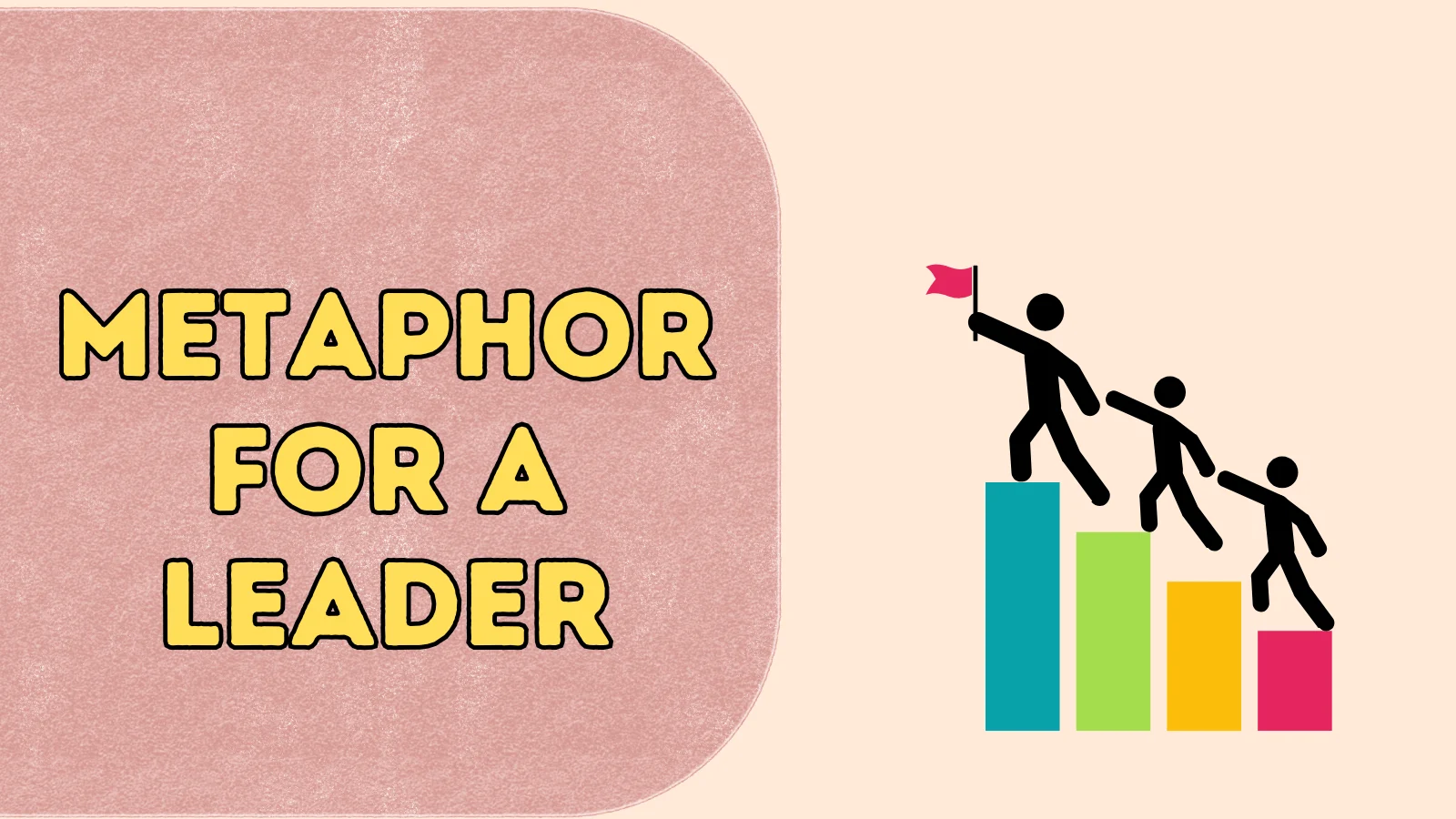
A metaphor for a leader helps you describe someone who inspires, guides, and influences others through vivid and memorable language. Instead of simply calling someone a leader, a well-chosen metaphor paints a picture of their character, values, and impact. Whether you’re writing a speech, essay, story, recommendation letter, or social media post, metaphors can make your message more engaging and meaningful.
In this guide, you’ll learn what leadership metaphors are, why they work, how to choose the right one for different situations, and discover a wide variety of original metaphors that capture different leadership styles and personalities.
Key Takeaways
- Leadership metaphors make descriptions more vivid and memorable.
- Different metaphors emphasize different leadership qualities, such as courage, wisdom, vision, or resilience.
- The best metaphor depends on your audience, tone, and purpose.
- Original metaphors create a stronger impression than overused expressions.
- Matching the metaphor to the leader’s personality makes your writing more authentic.
What Is a Metaphor?
A metaphor is a figure of speech that describes one thing as if it were another to highlight shared qualities. Unlike literal descriptions, metaphors encourage readers to visualize ideas through imagery and symbolism.
Literal: She is an excellent leader.
Metaphor: She is the lighthouse that keeps every ship on course.
The metaphor doesn’t mean she is literally a lighthouse. Instead, it emphasizes her ability to provide guidance, direction, and hope.
Why Metaphors Are Powerful for Describing Leaders
Leadership is more than giving instructions. Great leaders inspire confidence, solve problems, unite people, and help others reach their potential. Metaphors capture these qualities in ways that ordinary descriptions often cannot.
They help readers:
- Visualize leadership qualities.
- Connect emotionally with the description.
- Remember the message.
- Understand complex leadership styles.
- Appreciate different forms of influence.
How Different Leadership Styles Shape Metaphors
Not every leader leads in the same way. Choosing a metaphor that reflects a person’s leadership style creates a more accurate and meaningful description.
| Leadership Style | Common Traits | Metaphor Theme |
|---|---|---|
| Visionary | Inspires future goals | Light, stars, horizon |
| Supportive | Encourages others | Trees, bridges, gardens |
| Courageous | Faces challenges | Mountains, shields, anchors |
| Strategic | Plans carefully | Chess, compass, architect |
| Innovative | Creates change | Sparks, inventors, rivers |
| Servant Leader | Puts others first | Roots, soil, foundation |
Everyday Leadership Metaphors
A Lighthouse
Metaphor: She is the lighthouse that keeps everyone on course.
Example: During difficult times, she became the lighthouse that guided the entire team.
Meaning: Represents guidance, clarity, and dependable leadership.
Best situation: Workplace, education, community leadership.
Tone: Inspirational.
A Compass
Metaphor: He is the team’s compass.
Example: Whenever uncertainty appeared, he became the team’s compass.
Meaning: Symbolizes direction, wisdom, and sound judgment.
Best situation: Business, mentoring, coaching.
Tone: Professional.
A Bridge
Metaphor: She became the bridge between ideas and action.
Example: She became the bridge that connected every department.
Meaning: Represents unity and communication.
Best situation: Collaboration, teamwork.
Tone: Positive.
An Anchor
Metaphor: He is the anchor that keeps the team steady.
Example: During the crisis, he remained the anchor everyone relied on.
Meaning: Symbolizes stability and reliability.
Best situation: Challenging situations.
Tone: Strong, reassuring.
A North Star
Metaphor: She became the North Star for everyone around her.
Example: Her vision made her the North Star of the organization.
Meaning: Represents inspiration and long-term direction.
Best situation: Visionary leadership.
Tone: Uplifting.
A Gardener
Metaphor: He is a gardener who helps people grow.
Example: Instead of controlling employees, he became a gardener who nurtured their talents.
Meaning: Focuses on growth and development.
Best situation: Mentorship, education.
Tone: Warm.
A Foundation
Metaphor: She became the foundation of the company.
Example: Her consistency made her the foundation everyone trusted.
Meaning: Symbolizes strength and dependability.
Best situation: Organizations and teams.
Tone: Professional.
A Torch
Metaphor: He carries the torch through uncertainty.
Example: Even during setbacks, he carried the torch that inspired others.
Meaning: Represents hope and inspiration.
Best situation: Motivational writing.
Tone: Inspirational.
Powerful Leadership Metaphors
A Mountain
Metaphor: She stood like a mountain.
Example: Through every challenge, she remained a mountain that no storm could move.
Meaning: Represents resilience and unwavering strength.
Best situation: Crisis leadership.
Tone: Powerful.
A Sunrise
Metaphor: He is the sunrise after a long night.
Example: His appointment became the sunrise the company needed.
Meaning: Symbolizes hope and fresh beginnings.
Best situation: Organizational change.
Tone: Hopeful.
A Blacksmith
Metaphor: She is a blacksmith forging stronger people.
Example: Every challenge she gave became another strike that shaped future leaders.
Meaning: Represents growth through discipline.
Best situation: Coaching and leadership development.
Tone: Motivational.
A River
Metaphor: He is a river that keeps moving forward.
Example: Obstacles only made him find a better path, like a river flowing around stone.
Meaning: Represents adaptability and persistence.
Best situation: Change management.
Tone: Inspirational.
A Beacon
Metaphor: She became a beacon during uncertainty.
Example: Her calm decisions made her a beacon for the entire organization.
Meaning: Represents hope and guidance.
Best situation: Difficult situations.
Tone: Encouraging.
A Castle Wall
Metaphor: He became the castle wall protecting his people.
Example: He stood between his team and unnecessary pressure.
Meaning: Symbolizes protection and responsibility.
Best situation: Leadership during adversity.
Tone: Strong.
An Eagle
Metaphor: She is an eagle that sees beyond the horizon.
Example: While others focused on today, she looked years ahead like an eagle.
Meaning: Represents vision and foresight.
Best situation: Strategic leadership.
Tone: Confident.
A Ship’s Captain
Metaphor: He is the captain steering through rough seas.
Example: Even during uncertainty, he never lost sight of the destination.
Meaning: Represents responsibility and direction.
Best situation: Business and organizational leadership.
Tone: Professional.
A Flame That Ignites Others
Metaphor: She is a flame that lights countless candles.
Example: Her encouragement inspired everyone to become leaders themselves.
Meaning: Leadership multiplies by inspiring others.
Best situation: Mentoring.
Tone: Inspirational.
An Oak Tree
Metaphor: He is an oak tree offering strength and shelter.
Example: Everyone found confidence beneath his steady leadership.
Meaning: Represents endurance and protection.
Best situation: Community leadership.
Tone: Warm and dependable.
Inspiring Leadership Metaphors
A Bridge Across Stormy Waters
Metaphor: She became a bridge across stormy waters.
Example: During the company merger, she became a bridge across stormy waters, helping both teams move forward together.
Meaning: Represents a leader who brings people together during difficult transitions.
Best situation: Organizational change, conflict resolution.
Tone: Encouraging.
A Master Builder
Metaphor: He is a master builder of people and possibilities.
Example: Rather than simply managing projects, he became a master builder of confident teams.
Meaning: Highlights a leader’s ability to create strong foundations and develop future success.
Best situation: Business, education, mentorship.
Tone: Professional.
The Wind Beneath Strong Wings
Metaphor: She became the wind beneath strong wings.
Example: Her encouragement became the wind beneath strong wings, helping every employee reach new heights.
Meaning: Focuses on empowering others instead of seeking personal recognition.
Best situation: Coaching, mentoring.
Tone: Heartwarming.
A Deep-Rooted Tree
Metaphor: He is a deep-rooted tree that never fears the storm.
Example: While circumstances changed, he remained a deep-rooted tree that everyone trusted.
Meaning: Represents stability, wisdom, and resilience.
Best situation: Long-term leadership.
Tone: Inspirational.
A Map Through the Unknown
Metaphor: She became the map through the unknown.
Example: When the project lost direction, she became the map through the unknown.
Meaning: Describes someone who provides clarity during uncertainty.
Best situation: Strategic planning.
Tone: Professional.
The First Light of Morning
Metaphor: He became the first light of morning.
Example: His fresh ideas became the first light of morning after months of setbacks.
Meaning: Symbolizes hope, optimism, and new beginnings.
Best situation: Change leadership.
Tone: Optimistic.
A Steady Drumbeat
Metaphor: She became the steady drumbeat that kept everyone moving.
Example: Her consistent encouragement became the steady drumbeat behind the team’s success.
Meaning: Represents consistency and motivation.
Best situation: Team leadership.
Tone: Motivational.
A Keystone
Metaphor: He became the keystone holding everything together.
Example: Without his leadership, the entire project would have fallen apart.
Meaning: Represents the essential support that keeps a team or organization strong.
Best situation: Project management.
Tone: Strong.
Nature-Inspired Leadership Metaphors
A River That Carves Mountains
Metaphor: She is a river that carves mountains.
Example: Her patience and determination became a river that carved mountains over time.
Meaning: Shows that lasting leadership comes through persistence rather than force.
Best situation: Long-term achievements.
Tone: Inspirational.
The Sun Breaking Through Clouds
Metaphor: He became the sun breaking through clouds.
Example: His speech became the sun breaking through clouds after weeks of uncertainty.
Meaning: Represents hope and renewed confidence.
Best situation: Motivational speeches.
Tone: Uplifting.
A Forest Giving Shelter
Metaphor: She became a forest giving shelter to everyone around her.
Example: New employees quickly felt welcomed because she became a forest giving shelter.
Meaning: Highlights protection, inclusion, and support.
Best situation: Team culture.
Tone: Warm.
A Waterfall of Energy
Metaphor: He is a waterfall of energy.
Example: His enthusiasm became a waterfall of energy that motivated the whole department.
Meaning: Represents contagious passion and momentum.
Best situation: Sales teams, startups, events.
Tone: Energetic.
A Falcon Above the Clouds
Metaphor: She is a falcon soaring above the clouds.
Example: She anticipated industry changes long before competitors noticed them.
Meaning: Represents foresight and strategic thinking.
Best situation: Executive leadership.
Tone: Confident.
The Roots Beneath the Forest
Metaphor: He became the roots beneath the forest.
Example: Few people saw his work, but he quietly supported everyone’s success.
Meaning: Describes humble leadership that strengthens others behind the scenes.
Best situation: Servant leadership.
Tone: Humble.
A Garden in Every Season
Metaphor: She became a garden in every season.
Example: Whether times were easy or difficult, she continued helping people grow.
Meaning: Represents consistent care and development.
Best situation: Education, mentoring.
Tone: Encouraging.
The Horizon Everyone Followed
Metaphor: He became the horizon everyone followed.
Example: His ambitious vision inspired the entire company to pursue bigger goals.
Meaning: Represents vision that motivates others toward a shared future.
Best situation: Visionary leadership.
Tone: Aspirational.
Professional Leadership Metaphors
An Architect of Success
Metaphor: She became the architect of success.
Example: Every achievement reflected the careful planning of an architect of success.
Meaning: Highlights planning, structure, and long-term thinking.
Best situation: Business, project management.
Tone: Professional.
A Conductor of Great Minds
Metaphor: He became the conductor of great minds.
Example: Rather than doing every task himself, he became the conductor of great minds working together.
Meaning: Shows a leader’s ability to coordinate diverse talents.
Best situation: Executive leadership.
Tone: Professional.
The Engine of Progress
Metaphor: She became the engine of progress.
Example: Her determination became the engine of progress behind every successful initiative.
Meaning: Represents momentum, productivity, and continuous improvement.
Best situation: Organizational leadership.
Tone: Strong.
A Cornerstone of Excellence
Metaphor: He became the cornerstone of excellence.
Example: His commitment to quality made him the cornerstone of excellence throughout the organization.
Meaning: Symbolizes reliability and high standards.
Best situation: Corporate environments.
Tone: Formal.
A Compass in the Fog
Metaphor: She became a compass in the fog.
Example: During uncertain market conditions, she became a compass in the fog for the executive team.
Meaning: Represents calm decision-making during uncertainty.
Best situation: Business strategy, crisis management.
Tone: Professional.
A Spark That Starts the Fire
Metaphor: He became the spark that started the fire.
Example: His innovative idea became the spark that transformed the entire company.
Meaning: Highlights the power of one leader to inspire widespread change.
Best situation: Innovation, entrepreneurship.
Tone: Dynamic.
Short and Simple Leadership Metaphors
A Guiding Star
Metaphor: She is a guiding star.
Example: She became a guiding star for every new employee.
Meaning: Represents someone who provides clear direction and inspiration.
Best situation: School, workplace, mentoring.
Tone: Simple, inspirational.
A Strong Pillar
Metaphor: He is a strong pillar.
Example: During every challenge, he remained a strong pillar for the team.
Meaning: Symbolizes strength, support, and reliability.
Best situation: Team leadership, family leadership.
Tone: Encouraging.
A Bright Torch
Metaphor: She is a bright torch.
Example: Her determination became a bright torch that inspired everyone around her.
Meaning: Represents hope, motivation, and guidance.
Best situation: Motivational writing.
Tone: Positive.
A Safe Harbor
Metaphor: He is a safe harbor.
Example: Whenever problems arose, he became a safe harbor for his colleagues.
Meaning: Describes a leader who provides security and reassurance.
Best situation: Workplace, community leadership.
Tone: Reassuring.
A Solid Rock
Metaphor: She is a solid rock.
Example: She remained a solid rock through every challenge.
Meaning: Represents dependability and emotional strength.
Best situation: Personal or professional leadership.
Tone: Strong.
A Guiding Hand
Metaphor: He is a guiding hand.
Example: His experience became a guiding hand for the younger team members.
Meaning: Symbolizes mentorship and support.
Best situation: Coaching, education.
Tone: Friendly.
A Rising Sun
Metaphor: She is a rising sun.
Example: Her fresh ideas made her the rising sun of the organization.
Meaning: Represents hope, growth, and new opportunities.
Best situation: Emerging leaders.
Tone: Optimistic.
A Steady Flame
Metaphor: He is a steady flame.
Example: Even under pressure, he remained a steady flame.
Meaning: Highlights consistency and resilience.
Best situation: Crisis leadership.
Tone: Calm.
Metaphor vs. Simile
Although metaphors and similes both compare two unlike things, they do so in different ways. Understanding the distinction helps you choose the most effective expression for your writing.
What Is a Metaphor?
A metaphor states that one thing is another to create a strong and direct comparison.
Examples:
- She is the lighthouse of our organization.
- He became the team’s compass.
- Our manager is the bridge between ideas and action.
These comparisons aren’t meant literally. Instead, they highlight qualities such as guidance, wisdom, and connection.
What Is a Simile?
A simile compares two things using words like “like” or “as.”
Examples:
- She is like a lighthouse guiding lost ships.
- He stood firm like a mountain.
- The coach was as steady as an anchor.
Similes are often easier for beginners because they clearly signal the comparison.
Key Differences
| Metaphor | Simile |
|---|---|
| Direct comparison | Indirect comparison |
| Says one thing is another | Uses like or as |
| Stronger imagery | Softer comparison |
| Often sounds more poetic | Often sounds more conversational |
Side-by-Side Examples
| Metaphor | Simile |
|---|---|
| She is the North Star of the team. | She is like the North Star for the team. |
| He became an anchor during the crisis. | He was as dependable as an anchor. |
| The principal is the foundation of the school. | The principal is like the foundation of the school. |
| Our captain is the engine of success. | Our captain works like the engine of the team. |
When to use a metaphor: Choose a metaphor when you want your writing to feel vivid, memorable, and emotionally engaging.
When to use a simile: Choose a simile when you want a straightforward comparison that’s easy for all readers to understand.
How to Choose the Right Metaphor for a Leader
A strong metaphor doesn’t just sound impressive—it matches the leader, the audience, and the situation. Here are a few tips to help you make the right choice.
Consider Your Audience
Think about who will read or hear your writing.
- Students: Use simple, familiar images like a lighthouse or a compass.
- Professionals: Choose metaphors such as an architect, a conductor, or a cornerstone.
- Creative readers: Experiment with poetic imagery like a river carving mountains or the first light of morning.
The clearer the image is to your audience, the stronger its impact.
Match the Leadership Style
Every leader has different strengths. Your metaphor should reflect those qualities.
- Visionary leaders: North Star, horizon, eagle
- Supportive leaders: Gardener, bridge, roots
- Resilient leaders: Mountain, oak tree, anchor
- Innovative leaders: Spark, sunrise, river
- Protective leaders: Castle wall, lighthouse, safe harbor
Choosing a metaphor that aligns with the person’s leadership style makes your description feel authentic rather than generic.
Think About the Context
The same metaphor may not work in every situation.
- For a graduation speech, a hopeful image like a torch or a sunrise fits naturally.
- In a business report, a professional metaphor such as an architect or a compass may be more appropriate.
- In a novel or poem, imaginative metaphors can create stronger emotional impact.
Always consider the setting before selecting your imagery.
Keep the Tone Consistent
Your metaphor should support the overall tone of your writing.
- Formal: Cornerstone, architect, conductor
- Inspirational: Lighthouse, North Star, sunrise
- Poetic: River, forest, horizon
- Motivational: Torch, flame, mountain
A consistent tone helps your writing feel polished and purposeful.
Expert Writing Tips
Great leadership metaphors do more than sound creative—they reveal something meaningful about the person being described. These techniques will help you write metaphors that are original, memorable, and appropriate for any audience.
Focus on One Leadership Quality
Before creating a metaphor, identify the leader’s strongest characteristic. Is it wisdom, courage, resilience, compassion, or vision? Building your metaphor around one central quality keeps it clear and impactful.
Instead of:
She is everything the team needs.
Try:
She is the compass that keeps every step moving in the right direction.
A focused metaphor is easier to understand and more memorable.
Draw Inspiration From Everyday Life
Some of the strongest metaphors come from ordinary objects and experiences. Readers instantly recognize these images, making your writing feel relatable.
Consider using imagery from:
- Nature
- Travel
- Architecture
- Music
- Sports
- Gardening
- Navigation
- Light
- Weather
For example, comparing a leader to a bridge or a gardener often feels more natural than using abstract concepts.
Avoid Overused Metaphors
Familiar metaphors can lose their impact because readers have seen them many times.
Common clichés:
- The captain of the ship
- The king of the jungle
- A lion among men
- The boss of bosses
- Wearing many hats
Instead, refresh these ideas with more original imagery.
Instead of:
He is the captain of the ship.
Try:
He is the current that keeps every boat moving toward the same shore.
Fresh imagery captures attention while communicating the same leadership qualities.
Match the Metaphor to the Situation
A metaphor should fit the context naturally.
For example:
- A teacher might be a gardener cultivating young minds.
- A CEO might be an architect designing tomorrow’s success.
- A coach might be the steady drumbeat behind every victory.
- A community volunteer might be the roots that quietly hold the neighborhood together.
Specific metaphors often feel more authentic than broad, one-size-fits-all comparisons.
Use Concrete Images
Readers connect more easily with images they can picture.
Instead of saying:
She became the source of inspiration.
Try:
She became the sunrise that chased away every doubt.
The second example creates a vivid mental picture while expressing the same idea.
Keep Your Metaphors Consistent
Avoid switching between unrelated images in the same description.
Confusing example:
He was the lighthouse, the lion, the engine, and the mountain of the company.
Using several unrelated metaphors at once can distract readers.
Better example:
He became the lighthouse that guided the company through every storm.
One clear image creates a stronger impression than several competing ones.
Show Leadership Through Actions
Rather than simply assigning a metaphor, connect it to what the leader actually does.
Instead of:
She is a bridge.
Write:
She became the bridge that united departments that had rarely worked together.
Adding action makes the metaphor feel earned and believable.
Balance Creativity With Clarity
Creative metaphors should still be easy to understand. If readers have to stop and decode the comparison, its impact may be lost.
Ask yourself:
- Does the image make sense?
- Does it reflect the leader’s qualities?
- Will my audience understand it immediately?
If the answer is yes, you’ve likely found a strong metaphor.
Common Mistakes to Avoid
Even experienced writers can weaken their descriptions by choosing metaphors that don’t fit the context. Recognizing these common mistakes will help you write with greater confidence and precision.
Using Clichés Too Often
Well-known expressions may feel familiar, but they rarely leave a lasting impression.
Overused:
- He is the captain of the ship.
- She is the queen of the office.
- He is a lion.
Better alternatives:
- He became the compass during uncertain times.
- She is the bridge connecting every voice.
- He is the oak tree that never bends in the strongest winds.
Fresh metaphors make your writing stand out.
Mixing Unrelated Images
Combining several different metaphors in one sentence can confuse readers.
Incorrect:
She is the lighthouse that planted the seeds of victory while steering the ship.
This sentence mixes navigation, gardening, and sailing.
Better:
She became the lighthouse that guided the team through every challenge.
Choose one image and develop it fully.
Choosing the Wrong Emotional Tone
Not every metaphor fits every situation.
A humorous metaphor may feel out of place in a formal recommendation letter, while an overly dramatic metaphor may seem excessive in a business report.
Formal settings:
- Architect
- Cornerstone
- Compass
- Foundation
Creative settings:
- Sunrise
- River
- Forest
- Eagle
Matching the tone to the context makes your writing more effective.
Overusing Dramatic Language
Leadership is impressive, but exaggeration can make your writing feel unrealistic.
Too exaggerated:
He held the entire universe together with his leadership.
More believable:
He became the steady anchor that helped the team weather every challenge.
Moderate, believable imagery often has greater impact than extreme comparisons.
Forgetting Your Audience
A metaphor that’s perfect for a poem may not suit a business presentation.
Before choosing a metaphor, consider:
- Who will read it?
- What is the purpose?
- How formal should the language be?
- Will the imagery be familiar to the audience?
Thoughtful choices make your writing more engaging and easier to understand.
Explaining the Metaphor Too Much
A strong metaphor should communicate its meaning naturally. If you spend several sentences explaining it, the impact may be reduced.
Instead of:
She is a lighthouse because lighthouses guide ships, and ships need guidance, just as employees need guidance.
Write:
She became the lighthouse that guided the team through uncertainty.
Trust the image to do most of the work. Clear, concise metaphors are usually the most memorable.
Frequently Asked Questions
What is a metaphor for a leader?
A metaphor for a leader is a figurative comparison that describes a leader by comparing them to something else without using “like” or “as.” Instead of saying someone is a good leader, you might say, “She is the lighthouse guiding the team through every storm.” This creates a stronger, more memorable image of leadership.
What are some powerful metaphors for leadership?
Some effective metaphors for leadership include:
- A lighthouse
- A compass
- A North Star
- An anchor
- A bridge
- An architect
- A gardener
- A mountain
- An oak tree
- A torch
Each metaphor emphasizes a different quality, such as guidance, stability, resilience, growth, or vision.
Why do writers use metaphors to describe leaders?
Writers use metaphors because they make leadership easier to visualize and remember. Rather than listing personality traits, metaphors show how a leader influences others through symbolic imagery, making speeches, stories, essays, and articles more engaging.
How do I choose the right metaphor for a leader?
Choose a metaphor that matches the leader’s most noticeable quality and the context of your writing.
For example:
- A compass suits a leader who provides direction.
- An anchor represents someone who remains calm under pressure.
- A gardener highlights a leader who helps others grow.
- A bridge fits someone who brings people together.
- An architect emphasizes careful planning and long-term vision.
The more closely the metaphor reflects the leader’s actions and personality, the more authentic it will feel.
What is the difference between a leadership metaphor and a leadership simile?
A metaphor makes a direct comparison, while a simile compares two things using “like” or “as.”
Metaphor: She is the North Star of our team.
Simile: She is like the North Star for our team.
Metaphors often create stronger imagery, whereas similes provide a gentler, more straightforward comparison.
Can leadership metaphors be used in professional writing?
Yes. Leadership metaphors are commonly used in business presentations, recommendation letters, leadership speeches, employee recognition, coaching materials, and organizational communications. For professional settings, choose clear and appropriate metaphors such as architect, cornerstone, compass, or bridge.
What makes a leadership metaphor effective?
An effective leadership metaphor is:
- Easy to understand
- Relevant to the situation
- Appropriate for the audience
- Focused on one leadership quality
- Original without being confusing
The best metaphors help readers picture the leader’s influence instead of simply describing it.
Can I create my own leadership metaphors?
Absolutely. Original metaphors often leave the strongest impression. Start by identifying the leader’s defining quality, then compare that quality to something familiar that shares the same characteristics.
For example:
- A leader who inspires growth could become a gardener nurturing a thriving forest.
- A leader who solves problems could become a key unlocking hidden opportunities.
- A leader who remains calm during uncertainty could become a harbor welcoming ships through the storm.
Creating your own metaphors gives your writing a unique voice and helps avoid overused expressions.
Conclusion
Finding the right metaphor for a leader can turn an ordinary description into one that inspires, motivates, and stays with readers long after they’ve finished reading. Whether you compare a leader to a lighthouse, a compass, an oak tree, or an architect, the strongest metaphors highlight the qualities that make exceptional leadership meaningful—guidance, resilience, vision, integrity, and the ability to bring out the best in others.
The most effective metaphors are not necessarily the most elaborate; they’re the ones that fit the person, the audience, and the message. By choosing imagery that reflects real leadership qualities and avoiding overused clichés, you can create writing that is both memorable and authentic.
As you develop your own leadership descriptions, don’t be afraid to experiment with fresh ideas inspired by nature, everyday life, history, or personal experience. A thoughtful metaphor doesn’t just describe a leader—it helps readers understand the lasting impact that true leadership has on people, teams, and communities.

I Am Alex Gard.I’m passionate about language, creative writing, and figurative expressions. Through SmartMetaphors, I help readers discover meaningful metaphors, similes, and literary devices to make their writing more engaging and impactful.