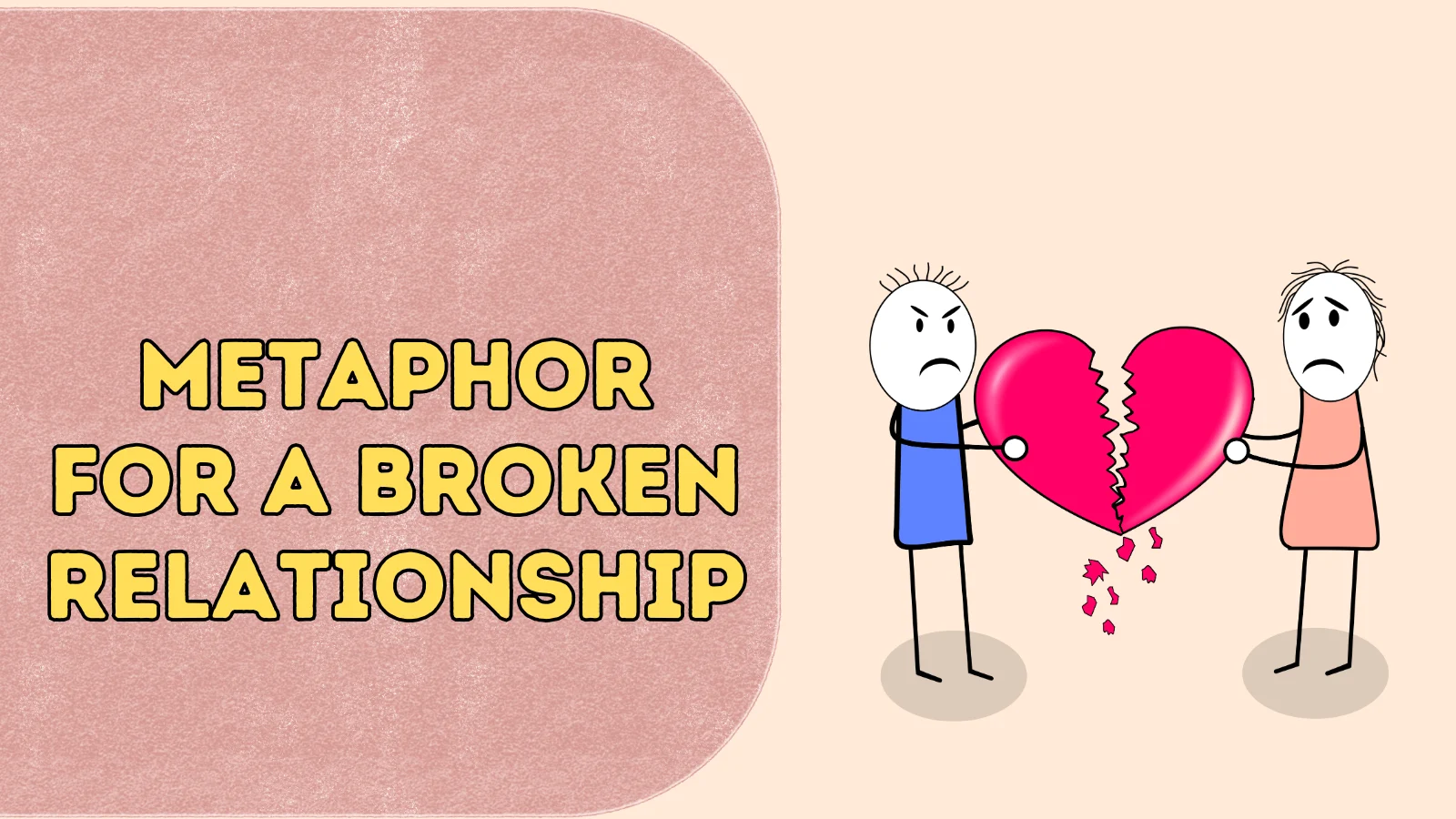
A metaphor for a broken relationship can express heartbreak, emotional distance, betrayal, or the pain of growing apart in a way that resonates more deeply than literal language. Instead of simply saying a relationship ended, metaphors paint vivid emotional pictures that help readers connect with the experience.
Whether you’re writing a poem, story, personal essay, song lyric, wedding speech, or social media caption, the right metaphor can communicate sadness, healing, regret, or hope with greater impact.
In this guide, you’ll learn what relationship metaphors are, why they work so well, how to choose the right one for different situations, and how to use them naturally in your writing.
Key Takeaways
- Metaphors help express emotional pain without stating it directly.
- Different metaphors reflect different types of relationship struggles.
- The best metaphor depends on the situation, audience, and emotional tone.
- Fresh, original metaphors create stronger emotional connections than clichés.
- A thoughtful metaphor can show heartbreak, healing, distance, or closure.
What Is a Metaphor?
A metaphor is a figure of speech that describes one thing as another to highlight a shared quality. Instead of saying someone feels heartbroken, a metaphor creates an image that allows readers to experience that emotion.
Literal: Their relationship ended.
Metaphor: Their relationship became a bridge with its center washed away.
The second sentence doesn’t describe a real bridge. It uses imagery to symbolize separation, loss, and the inability to reconnect.
How Metaphors Express a Broken Relationship
Relationships rarely break all at once. Some fade slowly, while others collapse after a single event. Metaphors capture these emotional differences by connecting feelings with familiar images.
For example:
- A cracked mirror suggests trust that cannot fully be restored.
- A dying fire symbolizes fading love.
- An abandoned house reflects loneliness and neglect.
- A ship without an anchor represents instability.
- A withered garden suggests love that was never nurtured.
These images help readers feel the emotional weight behind the relationship.
Why Writers Use Relationship Metaphors
Metaphors make emotional writing more memorable because they:
- Show emotions instead of telling them.
- Create vivid mental imagery.
- Make personal experiences relatable.
- Add depth to stories and poetry.
- Help readers connect emotionally with characters.
Compare these examples:
Plain: They slowly drifted apart.
With a metaphor: Their hearts became two boats carried away by different tides.
The metaphor creates a stronger emotional picture while leaving room for interpretation.
How Emotional Intensity Changes Meaning
Different situations require different emotional imagery.
| Emotional Level | Example |
|---|---|
| Mild distance | A window slowly closing. |
| Growing conflict | A rope fraying strand by strand. |
| Deep heartbreak | A lighthouse abandoned in the storm. |
| Complete separation | A bridge collapsing into silence. |
Choosing imagery that matches the emotional intensity makes your writing feel authentic.
Everyday Metaphors for a Broken Relationship
A Bridge With Its Center Washed Away
Metaphor: Their relationship became a bridge with its center washed away.
Example: After years of silence, their relationship became a bridge with its center washed away.
Meaning: Connection has been lost, making reconciliation difficult.
Best Situation: Emotional essays, fiction.
Tone: Reflective.
A Clock Missing Its Hands
Metaphor: Their love became a clock missing its hands.
Example: Their love became a clock missing its hands, unable to move forward.
Meaning: The relationship has lost direction and purpose.
Best Situation: Personal writing.
Tone: Thoughtful.
A Candle Burning Its Last Flame
Metaphor: Their relationship was a candle burning its last flame.
Example: Every argument made their relationship a candle burning its last flame.
Meaning: Love is fading but not completely gone.
Best Situation: Romantic stories.
Tone: Emotional.
A Window Covered in Frost
Metaphor: Their hearts became windows covered in frost.
Example: Months without communication left their hearts as windows covered in frost.
Meaning: Emotional distance prevents openness.
Best Situation: Relationship reflections.
Tone: Gentle.
An Empty Dining Table
Metaphor: Their marriage became an empty dining table.
Example: Even when they sat together, their marriage became an empty dining table.
Meaning: Physical presence without emotional connection.
Best Situation: Literary writing.
Tone: Melancholic.
Emotional Metaphors for a Broken Relationship
A Lighthouse Without Light
Metaphor: Their love became a lighthouse without light.
Example: After trust disappeared, their love became a lighthouse without light.
Meaning: Guidance, hope, and security have been lost.
Best Situation: Heartbreak stories.
Tone: Poetic.
A Garden Forgotten by Spring
Metaphor: Their relationship became a garden forgotten by spring.
Example: Years of neglect turned their relationship into a garden forgotten by spring.
Meaning: Love faded because it wasn’t nurtured.
Best Situation: Romantic writing.
Tone: Emotional.
A Song Missing Its Melody
Metaphor: Their marriage became a song missing its melody.
Example: Every conversation felt like a song missing its melody.
Meaning: The relationship still exists but has lost its joy.
Best Situation: Poetry.
Tone: Gentle.
A River That Forgot the Sea
Metaphor: Their love became a river that forgot the sea.
Example: They continued living together, but their love became a river that forgot the sea.
Meaning: The relationship has lost its destination and purpose.
Best Situation: Reflective writing.
Tone: Poetic.
A Tree Split by Lightning
Metaphor: Their relationship became a tree split by lightning.
Example: One betrayal left their relationship a tree split by lightning.
Meaning: Sudden emotional destruction.
Best Situation: Stories involving betrayal.
Tone: Dramatic.
Nature-Inspired Metaphors
Autumn That Never Ended
Metaphor: Their love became an autumn that never ended.
Example: After the separation, their love became an autumn that never ended.
Meaning: Loss without renewal.
Best Situation: Poetry.
Tone: Reflective.
A Nest Left Empty
Metaphor: Their relationship became a nest left empty.
Example: After the children moved away, their relationship became a nest left empty.
Meaning: Shared purpose has disappeared.
Best Situation: Family stories.
Tone: Emotional.
Two Mountains Growing Apart
Metaphor: They became two mountains separated by a widening valley.
Example: Years of misunderstandings turned them into two mountains separated by a widening valley.
Meaning: Emotional distance that continues to increase.
Best Situation: Literary fiction.
Tone: Poetic.
A Flower Without Rain
Metaphor: Their love became a flower without rain.
Example: Without honesty, their love became a flower without rain.
Meaning: Love cannot survive without care.
Best Situation: Romantic writing.
Tone: Gentle.
A Shore the Tide Never Reached
Metaphor: Their hearts became a shore the tide never reached.
Example: Every apology arrived too late, leaving their hearts a shore the tide never reached.
Meaning: Emotional needs remain unmet.
Best Situation: Emotional narratives.
Tone: Poignant.
Literary and Poetic Metaphors
A Book With Missing Chapters
Metaphor: Their story became a book with missing chapters.
Example: Their story became a book with missing chapters that neither of them could finish.
Meaning: An incomplete relationship filled with unanswered questions.
Best Situation: Novels and memoirs.
Tone: Literary.
A Symphony Without Its Finale
Metaphor: Their relationship became a symphony without its finale.
Example: Their relationship became a symphony without its finale, ending in silence instead of resolution.
Meaning: An unfinished emotional journey.
Best Situation: Creative writing.
Tone: Elegant.
A Portrait Fading From the Canvas
Metaphor: Their memories became a portrait fading from the canvas.
Example: Time turned their memories into a portrait fading from the canvas.
Meaning: Shared experiences slowly disappear.
Best Situation: Reflective essays.
Tone: Nostalgic.
A Library Locked Forever
Metaphor: Their love became a library locked forever.
Example: After the final goodbye, their love became a library locked forever.
Meaning: Shared memories remain but can no longer be revisited together.
Best Situation: Literary prose.
Tone: Somber.
A Letter Lost in the Wind
Metaphor: Their promises became a letter lost in the wind.
Example: Every promise became a letter lost in the wind after trust was broken.
Meaning: Commitments have disappeared without fulfillment.
Best Situation: Poetry and emotional storytelling.
Tone: Heartfelt.
Funny Metaphors for a Broken Relationship
A Phone Charger That Only Works at One Angle
Metaphor: Their relationship became a phone charger that only worked at one angle.
Example: Every conversation felt like adjusting a phone charger that only worked at one angle.
Meaning: The relationship only functions under very specific conditions.
Best Situation: Humorous blogs, lighthearted conversations.
Tone: Funny.
A Pizza Without Cheese
Metaphor: Their romance became a pizza without cheese.
Example: After the excitement disappeared, their romance became a pizza without cheese.
Meaning: Something essential is missing.
Best Situation: Casual writing.
Tone: Playful.
A Wi-Fi Signal With One Bar
Metaphor: Their communication became a Wi-Fi signal with one bar.
Example: Their communication became a Wi-Fi signal with one bar—always dropping at the worst moment.
Meaning: Weak, unreliable communication.
Best Situation: Social media, humorous stories.
Tone: Witty.
A Bicycle Missing a Wheel
Metaphor: Their relationship became a bicycle missing a wheel.
Example: Every attempt to fix things felt like riding a bicycle missing a wheel.
Meaning: It can no longer function properly.
Best Situation: Everyday conversations.
Tone: Lighthearted.
A Popcorn Bag With No Pop
Metaphor: Their love became a popcorn bag with no pop.
Example: Date nights felt like a popcorn bag with no pop—full of expectation but no excitement.
Meaning: The spark has disappeared.
Best Situation: Humorous relationship content.
Tone: Playful.
Romantic Metaphors for a Broken Relationship
A Rose That Forgot to Bloom
Metaphor: Their love became a rose that forgot to bloom.
Example: Their love became a rose that forgot to bloom despite every season changing.
Meaning: Love had the potential to flourish but never fully did.
Best Situation: Romantic poetry.
Tone: Tender.
Two Stars Drifting Into Different Skies
Metaphor: They became two stars drifting into different skies.
Example: Time turned them into two stars drifting into different skies.
Meaning: They still shine individually but no longer share the same path.
Best Situation: Love stories.
Tone: Poetic.
A Moon Hidden Behind Endless Clouds
Metaphor: Their affection became a moon hidden behind endless clouds.
Example: Misunderstandings left their affection as a moon hidden behind endless clouds.
Meaning: Love still exists but cannot be seen clearly.
Best Situation: Emotional fiction.
Tone: Gentle.
A Dance Without Music
Metaphor: Their relationship became a dance without music.
Example: They kept moving together, but their relationship became a dance without music.
Meaning: They continue the routine without emotional connection.
Best Situation: Romance novels.
Tone: Melancholic.
A Ring Without Its Gem
Metaphor: Their marriage became a ring without its gem.
Example: Broken trust turned their marriage into a ring without its gem.
Meaning: The relationship remains, but its most valuable part is gone.
Best Situation: Emotional essays.
Tone: Heartfelt.
Professional Writing Metaphors
A Building With Cracked Foundations
Metaphor: Their partnership became a building with cracked foundations.
Example: Years of dishonesty left their partnership a building with cracked foundations.
Meaning: The relationship lacks the stability needed to last.
Best Situation: Counseling articles, professional writing.
Tone: Professional.
A Contract Written in Sand
Metaphor: Their promises became a contract written in sand.
Example: Without commitment, their promises became a contract written in sand.
Meaning: Agreements that cannot withstand pressure.
Best Situation: Leadership or communication articles.
Tone: Formal.
A Compass With a Broken Needle
Metaphor: Their relationship became a compass with a broken needle.
Example: Without shared goals, their relationship became a compass with a broken needle.
Meaning: The relationship has lost direction.
Best Situation: Self-improvement writing.
Tone: Reflective.
A Puzzle With Missing Pieces
Metaphor: Their relationship became a puzzle with missing pieces.
Example: Trust disappeared, leaving their relationship a puzzle with missing pieces.
Meaning: Something essential prevents the relationship from feeling complete.
Best Situation: Educational or counseling content.
Tone: Thoughtful.
A Ship Sailing Without a Map
Metaphor: Their future became a ship sailing without a map.
Example: After they stopped communicating, their future became a ship sailing without a map.
Meaning: The relationship has no shared direction or plan.
Best Situation: Articles, speeches, coaching.
Tone: Inspirational.
Short and Simple Metaphors for Beginners
A Broken Bridge
Metaphor: Their relationship was a broken bridge.
Example: Their relationship was a broken bridge that neither dared to cross.
Meaning: The connection between them has been severed.
Best Situation: Everyday writing.
Tone: Simple.
A Burnt Candle
Metaphor: Their love was a burnt candle.
Example: After years of arguments, their love was a burnt candle.
Meaning: The emotional flame has gone out.
Best Situation: School assignments.
Tone: Gentle.
A Closed Door
Metaphor: Their future became a closed door.
Example: The final goodbye turned their future into a closed door.
Meaning: No opportunity remains to continue the relationship.
Best Situation: General writing.
Tone: Direct.
A Frozen River
Metaphor: Their emotions became a frozen river.
Example: Their emotions became a frozen river after months of silence.
Meaning: Feelings are trapped and no longer flow freely.
Best Situation: Stories and essays.
Tone: Emotional.
A Torn Kite
Metaphor: Their relationship became a torn kite.
Example: Their relationship became a torn kite that could no longer rise.
Meaning: Lost hope and shared dreams.
Best Situation: Poetry, fiction, personal reflections.
Tone: Poetic.
Metaphor vs. Simile
Understanding the difference between a metaphor and a simile helps you choose the most effective way to express a broken relationship.
What Is a Metaphor?
A metaphor directly states that one thing is another. It creates a stronger, more immersive image by treating the comparison as if it were real.
Examples:
- Their marriage was a house with cracked foundations.
- Their friendship became a road that ended at a cliff.
- His heart was an abandoned station.
These examples don’t mean the relationship literally became a house, road, or station. Instead, the imagery symbolizes instability, separation, and loneliness.
What Is a Simile?
A simile compares two things using words such as like or as. It makes the comparison more direct and often easier for readers to understand.
Examples:
- Their marriage was like a house with cracked foundations.
- Their friendship drifted apart like two leaves on different streams.
- His heart felt like an abandoned station.
Similes are excellent when you want descriptive language without making the comparison feel absolute.
Key Differences
| Metaphor | Simile |
|---|---|
| Says one thing is another. | Says one thing is like another. |
| Creates stronger imagery. | Creates gentler imagery. |
| More emotional and poetic. | More straightforward and descriptive. |
| Common in novels, poetry, and speeches. | Common in everyday writing and teaching. |
Side-by-Side Examples
Metaphor: Their relationship became a shipwreck.
Simile: Their relationship was like a shipwreck.
Metaphor: Trust was shattered glass.
Simile: Trust was like shattered glass.
Metaphor: Their love became winter without spring.
Simile: Their love was like winter without spring.
In each pair, the metaphor feels more vivid and emotionally powerful, while the simile provides a softer comparison.
How to Choose the Right Metaphor for a Broken Relationship
Not every broken relationship feels the same. The best metaphor reflects the specific emotions, circumstances, and audience.
Consider Your Audience
Think about who will read your writing.
For a novel or poem, rich and symbolic imagery can create a lasting emotional impact.
For a speech or blog post, simple and relatable metaphors are often more effective.
For younger readers or students, choose familiar images that are easy to visualize.
Match the Emotional Intensity
Your metaphor should fit the level of emotional pain.
A small disagreement doesn’t require catastrophic imagery.
For example:
- A loose thread suggests a relationship beginning to weaken.
- A cracked mirror suggests damaged trust.
- A bridge collapsing into the river suggests complete separation.
Matching the metaphor to the situation makes your writing more believable.
Think About the Context
Different situations call for different imagery.
Breakup after years together: Use metaphors about old homes, fading photographs, or changing seasons.
Friendship ending: Choose roads, bridges, trees, or rivers.
Family conflict: Images of roots, branches, or fractured foundations often feel natural.
Professional partnership: Buildings, compasses, contracts, or machinery fit better than romantic imagery.
Keep the Tone Consistent
The metaphor should support the mood of your writing.
If you’re writing a heartfelt poem, avoid humorous comparisons.
If you’re writing a lighthearted article, overly tragic metaphors may feel out of place.
Consistency helps readers stay emotionally connected.
Expert Writing Tips
Create Original Metaphors
Instead of copying common expressions, ask yourself:
- What does this relationship feel like?
- What image naturally represents that feeling?
- What object, place, or event shares the same qualities?
For example, instead of writing:
Their relationship was broken.
Try:
Their relationship became a lighthouse whose light no longer reached the sea.
The second version creates a stronger emotional image while remaining original.
Draw Inspiration From Everyday Life
Powerful metaphors don’t have to be complicated.
Look for inspiration in:
- Nature
- Weather
- Architecture
- Music
- Travel
- Gardening
- Art
- Oceans
- Seasons
- Light and shadow
Everyday experiences often produce the most relatable metaphors.
Avoid Clichés
Some metaphors have become so common that they no longer create a strong emotional response.
Examples include:
- Broken heart
- Love is a battlefield
- Ship has sailed
- End of the road
- Falling apart
Instead, look for fresh imagery.
Rather than saying:
Their hearts were broken.
Try:
Their hearts became two windows that no longer reflected the same sunrise.
Fresh metaphors feel more memorable because readers haven’t encountered them repeatedly.
Appeal to the Senses
The strongest metaphors help readers see, hear, or even feel the emotion.
Compare these examples:
Weak: Their relationship was falling apart.
Stronger: Their relationship became an old violin whose strings snapped one by one.
The second example allows readers to imagine both the image and the sound of the loss.
Keep the Comparison Clear
Creative metaphors should still be easy to understand.
If readers spend too much time figuring out the comparison, the emotional impact is lost.
A simple, meaningful image is usually more effective than one that’s overly complex.
Use Metaphors Sparingly
A powerful metaphor stands out because it has room to breathe.
Filling every sentence with figurative language can overwhelm readers and reduce the emotional impact.
Choose one strong metaphor for an important moment, then let the surrounding writing support it.
Common Mistakes When Using Metaphors for a Broken Relationship
Strong metaphors can make your writing unforgettable, but the wrong metaphor can confuse readers or weaken the emotional impact. Avoid these common mistakes to make your writing more effective.
Relying on Overused Metaphors
Some metaphors have been used so often that they no longer create a vivid image.
Overused:
- Their hearts were broken.
- Love is a battlefield.
- Their relationship fell apart.
- The spark was gone.
- They reached the end of the road.
These phrases still communicate the idea, but they rarely surprise or move readers.
Better Alternatives:
- Their love became a bridge swallowed by the tide.
- Their conversations became echoes in an empty hallway.
- Their trust was a stained window that no longer let in light.
- Their future became a map with every destination erased.
- Their promises became footprints disappearing in fresh snow.
Fresh imagery helps readers experience the emotion instead of simply recognizing a familiar phrase.
Mixing Unrelated Images
A metaphor should create one clear picture. Combining unrelated images can confuse readers.
Confusing Example:
Their relationship was a sinking ship climbing a mountain.
The ship and mountain don’t naturally work together, making the comparison difficult to imagine.
Better Example:
Their relationship became a ship slowly taking on water.
This image is focused and easy to visualize.
Choosing the Wrong Emotional Tone
The metaphor should match the seriousness of the situation.
A humorous image can feel insensitive during an emotional scene, while an overly tragic metaphor can seem exaggerated for a minor disagreement.
Less Effective:
Their argument was the end of the universe.
Better:
Their argument became a crack that spread across the foundation of their trust.
The second metaphor better matches the emotional scale of the event.
Using Too Many Metaphors Together
Multiple metaphors in the same paragraph can compete for attention.
Overloaded Example:
Their relationship was a broken bridge, a dying fire, a sinking ship, and a shattered mirror.
The reader has to imagine several unrelated pictures at once.
Better Example:
Their relationship became a bridge whose final support gave way.
One strong image often has more impact than several competing ones.
Making the Comparison Too Complicated
Creativity is valuable, but clarity should always come first.
If readers have to stop and decode the metaphor, the emotional connection may be lost.
Choose images that are original yet immediately understandable.
Ignoring the Context
The same metaphor doesn’t work equally well in every situation.
For example:
- A withered garden fits a relationship that slowly faded.
- A tree split by lightning better represents sudden betrayal.
- A boat drifting apart from the shore suits emotional distance.
- A house with cracked foundations reflects long-term instability.
Selecting imagery that matches the story makes your writing feel more authentic.
Frequently Asked Questions
What is a metaphor for a broken relationship?
A metaphor for a broken relationship compares the relationship to something else to express emotional pain, distance, or loss. For example, “Their relationship became a bridge with its center washed away.” This image symbolizes a connection that can no longer be crossed.
What are some powerful metaphors for a broken relationship?
Some powerful examples include:
- A lighthouse without light
- A garden forgotten by spring
- A bridge swallowed by the tide
- A song missing its melody
- A tree split by lightning
- A library locked forever
- A compass with a broken needle
- A window covered in frost
Each metaphor highlights a different kind of emotional experience, from fading love to sudden betrayal.
How do you describe a broken relationship creatively?
Instead of stating that the relationship ended, describe what it became.
For example:
- Their conversations became empty rooms.
- Their trust became cracked glass.
- Their future became an unopened letter.
- Their love became winter that never welcomed spring.
These images allow readers to feel the emotion rather than simply read about it.
What is the difference between a metaphor and a simile?
A metaphor says one thing is another, while a simile compares two things using like or as.
Metaphor: Their marriage became an abandoned house.
Simile: Their marriage was like an abandoned house.
Metaphors generally create stronger and more immersive imagery, while similes offer a gentler comparison.
How can writers use metaphors to show emotional distance?
Writers often use imagery involving separation, silence, weather, or fading light to illustrate emotional distance.
Examples include:
- They became two stars drifting into different skies.
- Their voices became echoes across an empty valley.
- Their hearts were islands divided by a restless sea.
- Their friendship became a road covered by fog.
These metaphors suggest distance without explicitly stating it.
Can a broken relationship metaphor also express hope?
Yes. Not every metaphor has to focus on loss. Some can acknowledge pain while leaving room for healing.
Examples include:
- The burnt forest waited for spring.
- The cracked wall welcomed the first ray of sunlight.
- The river found a new course after the landslide.
- The fallen tree became the beginning of a new forest.
These metaphors remind readers that endings can also lead to growth and renewal.
Conclusion
Finding the right metaphor for a broken relationship allows you to express heartbreak, disappointment, emotional distance, or healing with honesty and creativity. Rather than relying on familiar clichés, thoughtful metaphors transform complex emotions into vivid images that readers can see and feel.
Whether you’re writing a novel, poem, speech, journal entry, or social media post, choose imagery that reflects the unique story you want to tell. A relationship that ends isn’t always best described as simply “broken.” Sometimes it’s a bridge carried away by the tide, a garden waiting for rain, or two stars quietly drifting into different skies. The most memorable metaphors are the ones that feel true to the emotions behind them, helping your words leave a lasting impression.

I Am Alex Gard.I’m passionate about language, creative writing, and figurative expressions. Through SmartMetaphors, I help readers discover meaningful metaphors, similes, and literary devices to make their writing more engaging and impactful.