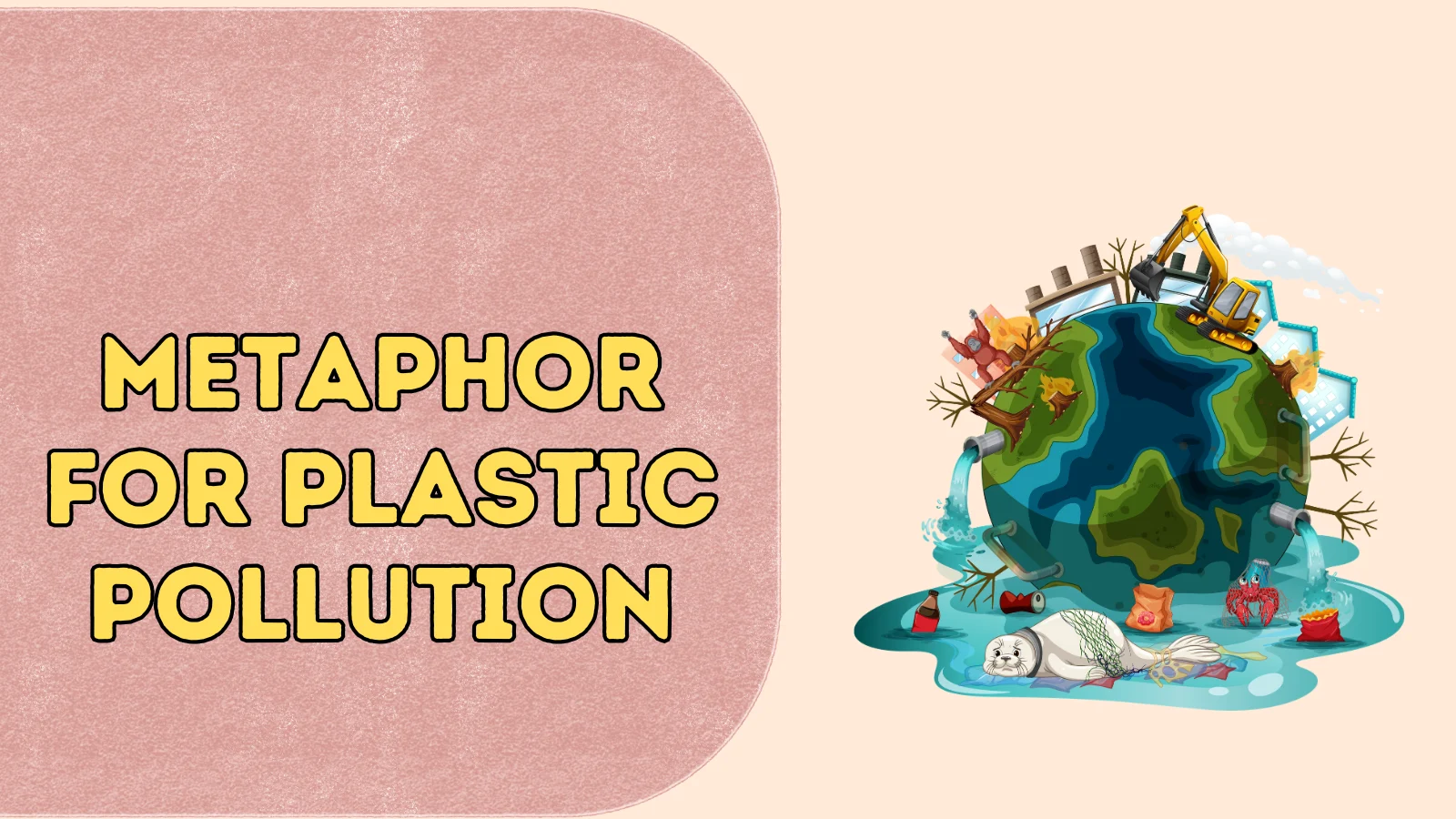
Finding the right metaphor for plastic pollution can help explain one of the world’s biggest environmental challenges in a way that is vivid, memorable, and emotionally powerful. Instead of relying on facts alone, metaphors turn an invisible or distant problem into something readers can picture and feel. Whether you’re writing an essay, speech, poem, article, or classroom assignment, the metaphors below will help you describe plastic pollution with creativity and impact.
In this guide, you’ll learn what makes a strong metaphor, why writers use them to discuss environmental issues, and how to choose the right metaphor for different audiences and situations.
Key Takeaways
- Metaphors make plastic pollution easier to understand and remember.
- The best metaphors match the tone and purpose of your writing.
- Nature-based imagery often creates the strongest emotional impact.
- Original metaphors are more effective than overused expressions.
- Context matters when selecting a metaphor for environmental topics.
What Is a Metaphor?
A metaphor is a figure of speech that describes one thing as if it were another to highlight a shared quality. Rather than saying something is like another thing, a metaphor directly equates them.
For example:
- Literal: Plastic pollution harms oceans.
- Metaphor: Plastic pollution is a silent tide swallowing the sea.
The metaphor paints a vivid picture of how plastic spreads and overwhelms marine ecosystems.
Why Writers Use Metaphors for Plastic Pollution
Plastic pollution is a complex environmental issue. Statistics can explain its scale, but metaphors help readers understand its emotional, ecological, and social impact.
Effective metaphors can:
- Make environmental problems more relatable.
- Inspire empathy for wildlife and ecosystems.
- Strengthen persuasive essays and speeches.
- Create memorable imagery for storytelling.
- Encourage action through emotional connection.
How Metaphors Shape Our Understanding
Different metaphors highlight different aspects of plastic pollution.
- A disease metaphor emphasizes spreading damage.
- A monster metaphor focuses on danger.
- A blanket metaphor shows how plastic covers habitats.
- A prison metaphor illustrates how wildlife becomes trapped.
- A shadow metaphor suggests an ever-present threat.
Choosing the right image helps communicate your intended message more effectively.
Everyday Metaphors for Plastic Pollution
A Silent Invader
Metaphor: Plastic pollution is a silent invader.
Example: Plastic pollution is a silent invader creeping into every corner of the ocean.
Meaning: It spreads gradually and often goes unnoticed until the damage is severe.
Best Situation: Essays, awareness campaigns.
Tone: Serious.
An Unwanted Guest
Metaphor: Plastic pollution is an unwanted guest that refuses to leave.
Example: Every beach seemed to host an unwanted guest that refused to leave.
Meaning: Highlights the long-lasting presence of plastic waste.
Best Situation: School assignments, speeches.
Tone: Relatable.
A Blanket Over Nature
Metaphor: Plastic pollution is a blanket smothering the Earth.
Example: Plastic bags formed a blanket smothering the wetlands.
Meaning: Emphasizes how plastic covers and harms natural habitats.
Best Situation: Environmental articles.
Tone: Emotional.
A Never-Ending Echo
Metaphor: Plastic pollution is a never-ending echo.
Example: Every discarded bottle became part of a never-ending echo across the coastline.
Meaning: One piece of waste can have lasting consequences.
Best Situation: Reflective writing.
Tone: Thought-provoking.
A Maze With No Exit
Metaphor: Plastic pollution is a maze with no exit for marine life.
Example: Lost fishing nets created a maze with no exit for sea turtles.
Meaning: Describes how wildlife becomes trapped.
Best Situation: Conservation writing.
Tone: Emotional.
Powerful Environmental Metaphors
A Plastic Storm
Metaphor: Plastic pollution is a storm that never stops.
Example: Rivers carried a plastic storm toward the sea.
Meaning: Shows the overwhelming and continuous flow of plastic waste.
Best Situation: Persuasive essays.
Tone: Dramatic.
A Slow Poison
Metaphor: Plastic pollution is a slow poison flowing through nature.
Example: Plastic pollution became a slow poison affecting every level of the food chain.
Meaning: Highlights long-term environmental harm.
Best Situation: Scientific communication.
Tone: Serious.
A Web of Waste
Metaphor: Plastic pollution is a web of waste.
Example: The coastline was trapped in a web of waste after the storm.
Meaning: Suggests widespread entanglement and interconnected damage.
Best Situation: Environmental reports.
Tone: Descriptive.
A Scar Across the Ocean
Metaphor: Plastic pollution is a scar across the ocean.
Example: Floating debris became a scar across the once-pristine waters.
Meaning: Represents lasting environmental damage.
Best Situation: Nature writing.
Tone: Poetic.
A Hungry Monster
Metaphor: Plastic pollution is a hungry monster consuming ecosystems.
Example: The hungry monster grew larger with every piece of discarded packaging.
Meaning: Suggests the growing scale of the problem.
Best Situation: Speeches, awareness campaigns.
Tone: Dramatic.
Nature-Inspired Metaphors
A Forest of Trash
Metaphor: Plastic pollution is a forest of trash growing without roots.
Example: The landfill resembled a forest of trash growing without roots.
Meaning: Shows the unnatural expansion of waste.
Best Situation: Descriptive essays.
Tone: Creative.
An Artificial Iceberg
Metaphor: Plastic pollution is an artificial iceberg drifting through the sea.
Example: Floating bottles formed an artificial iceberg visible from the shore.
Meaning: Illustrates the immense size of floating plastic accumulation.
Best Situation: Environmental articles.
Tone: Vivid.
A Choking Vine
Metaphor: Plastic pollution is a choking vine wrapping around the planet.
Example: Plastic ropes became a choking vine around coral reefs.
Meaning: Emphasizes suffocation and restriction.
Best Situation: Conservation writing.
Tone: Emotional.
A Black Cloud Without Rain
Metaphor: Plastic pollution is a black cloud without rain.
Example: The growing landfill loomed like a black cloud without rain.
Meaning: Symbolizes an ongoing threat with no relief.
Best Situation: Reflective writing.
Tone: Somber.
A River That Never Ends
Metaphor: Plastic pollution is a river that never ends.
Example: Disposable products created a river that never ends.
Meaning: Highlights the constant generation of waste.
Best Situation: Sustainability discussions.
Tone: Serious.
Literary and Poetic Metaphors
The Earth’s Heavy Necklace
Metaphor: Plastic pollution is the Earth’s heavy necklace.
Example: Coastlines wore the Earth’s heavy necklace of discarded plastic.
Meaning: Suggests an unwanted burden carried by the planet.
Best Situation: Poetry, creative writing.
Tone: Poetic.
The Ocean’s Broken Mirror
Metaphor: Plastic pollution is the ocean’s broken mirror.
Example: Floating debris turned the ocean into a broken mirror.
Meaning: Represents damaged beauty and environmental decline.
Best Situation: Descriptive passages.
Tone: Reflective.
A Song of Forgotten Bottles
Metaphor: Plastic pollution is a song of forgotten bottles.
Example: Every wave carried the song of forgotten bottles.
Meaning: Symbolizes humanity’s neglected responsibility.
Best Situation: Poetry.
Tone: Melancholic.
A Crown of Waste
Metaphor: Plastic pollution is a crown of waste placed upon the planet.
Example: Overflowing dumps formed a crown of waste around the city.
Meaning: Highlights the irony of human progress creating environmental damage.
Best Situation: Opinion writing.
Tone: Symbolic.
A Clock That Never Stops
Metaphor: Plastic pollution is a clock that never stops ticking.
Example: Every disposable cup added another second to the clock that never stops.
Meaning: Reminds readers that the problem continues to grow.
Best Situation: Persuasive writing.
Tone: Urgent.
Metaphor vs. Simile
What Is the Difference?
A metaphor directly says one thing is another, while a simile compares two things using like or as.
Metaphor: Plastic pollution is a silent invader.
Simile: Plastic pollution spreads like a silent invader.
Metaphors often sound stronger and more vivid, while similes provide a gentler comparison.
How to Choose the Right Metaphor
Consider Your Audience
Young students may understand simple images like a blanket or an unwanted guest, while older readers may appreciate symbolic metaphors such as a scar across the ocean.
Match the Purpose
Use emotional metaphors for speeches, descriptive metaphors for stories, and clear, direct metaphors for educational writing.
Keep It Relevant
Choose imagery that naturally connects to plastic pollution instead of forcing unrelated comparisons.
Expert Writing Tips
Focus on One Clear Image
Strong metaphors usually center on one memorable idea instead of combining several unrelated images.
Avoid Clichés
Instead of saying pollution is a ticking time bomb, create fresh imagery that suits your topic.
Use Specific Details
Concrete images such as reefs, rivers, turtles, beaches, or forests make metaphors more believable and engaging.
Common Mistakes
Mixing Unrelated Images
Avoid combining several metaphors in one sentence, as this can confuse readers.
Overusing Dramatic Language
Not every sentence needs intense imagery. Balance emotional metaphors with clear explanations.
Ignoring Context
A playful metaphor may weaken a serious environmental message. Match the tone to your audience and purpose.
Frequently Asked Questions
What is a metaphor for plastic pollution?
A metaphor for plastic pollution is a creative comparison that describes plastic waste through vivid imagery, such as “Plastic pollution is a silent invader.”
Why are metaphors useful for environmental writing?
They simplify complex issues, create emotional connections, and make important messages easier to remember.
Can metaphors help persuade readers?
Yes. Well-chosen metaphors make environmental problems feel more immediate and relatable, strengthening persuasive writing.
What is the difference between a metaphor and a simile?
A metaphor states that one thing is another, while a simile compares two things using like or as.
How can I create my own metaphor for plastic pollution?
Think about the main effect you want to highlight—such as spread, persistence, harm, or entanglement—and compare it to a familiar image that shares that quality.
Conclusion
Using a thoughtful metaphor for plastic pollution can turn facts into memorable images that inspire understanding and action. Whether you’re writing an essay, delivering a speech, or creating poetry, the right metaphor helps readers see the environmental impact from a fresh perspective. Choose imagery that fits your audience, supports your message, and encourages deeper reflection on protecting our planet.

I Am Alex Gard.I’m passionate about language, creative writing, and figurative expressions. Through SmartMetaphors, I help readers discover meaningful metaphors, similes, and literary devices to make their writing more engaging and impactful.