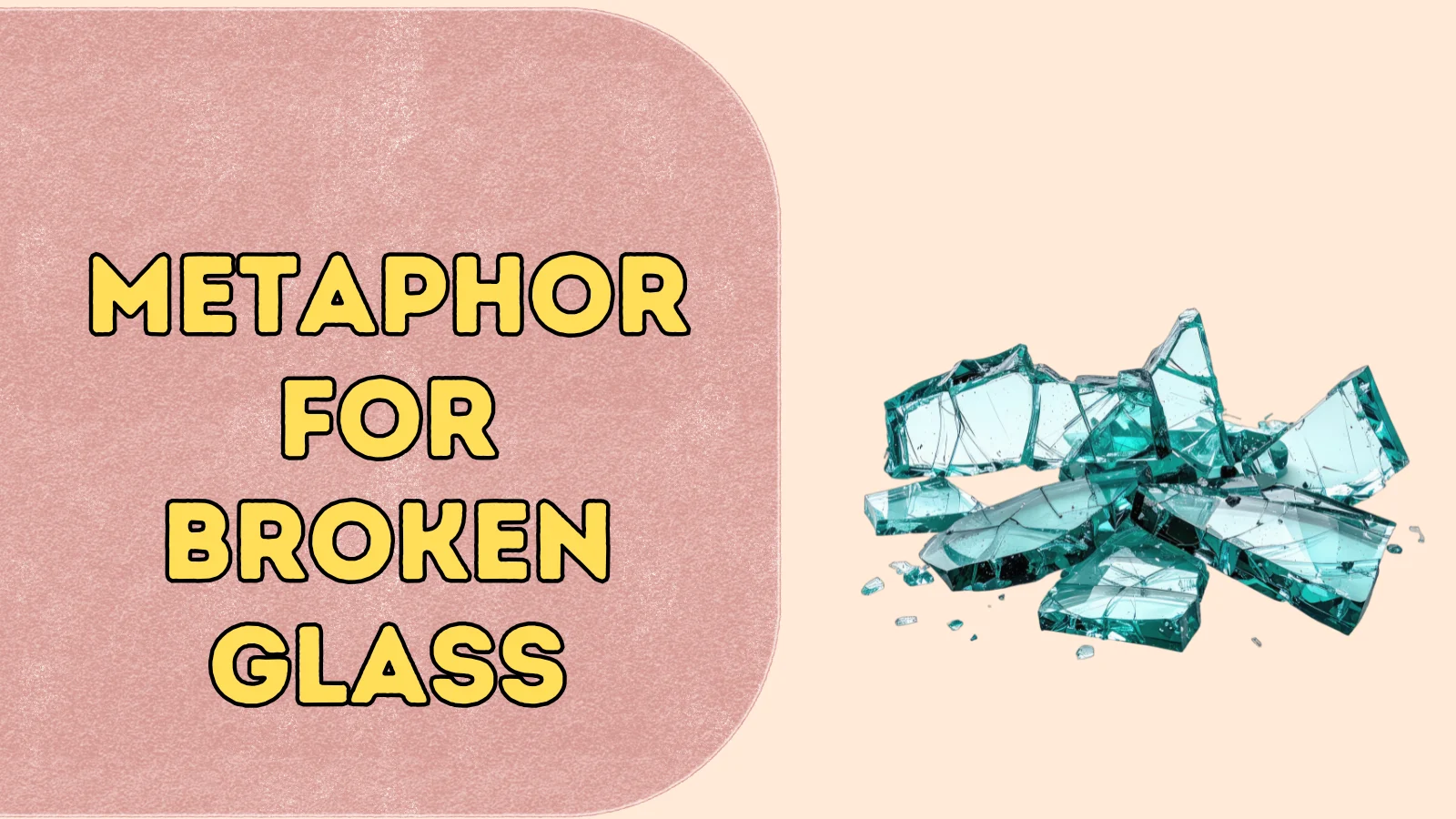
A metaphor for broken glass can express much more than physical damage. It often symbolizes emotional pain, shattered trust, lost dreams, fragile relationships, sudden change, or the difficult process of healing. By replacing plain descriptions with vivid metaphors, writers can help readers feel the weight of an experience instead of simply reading about it.
Whether you’re writing a poem, novel, speech, essay, or social media caption, the right metaphor can make your message more memorable and emotionally powerful. In this guide, you’ll discover original metaphors for broken glass, learn what they mean, explore when to use them, and gain practical writing tips to create your own compelling imagery.
Key Takeaways
- Broken glass commonly symbolizes loss, heartbreak, betrayal, and transformation.
- Different metaphors suit different emotions, from quiet sadness to explosive anger.
- Original metaphors create stronger emotional connections than overused expressions.
- Matching the metaphor to your audience and tone makes your writing more effective.
- Creative imagery helps readers visualize emotions instead of simply being told how someone feels.
What Is a Metaphor?
A metaphor is a figure of speech that describes one thing as another to highlight a shared quality. Instead of saying something is like another object, a metaphor directly equates the two, creating a stronger and more vivid image.
For example:
Literal: Their friendship ended.
Metaphor: Their friendship became a floor covered in broken glass.
The second sentence paints a clearer emotional picture by suggesting pain, danger, and something that cannot easily return to its original form.
What Does Broken Glass Symbolize?
Broken glass is a powerful symbol because it carries many meanings depending on the context.
It can represent:
- Heartbreak after losing someone
- Trust that has been shattered
- Dreams that no longer exist
- Emotional vulnerability
- Chaos caused by sudden events
- The lasting marks left by painful experiences
- The possibility of rebuilding after destruction
Because broken glass reflects light even after it breaks, it can also symbolize resilience, showing that beauty sometimes survives hardship.
Why Writers Use Broken Glass Metaphors
Broken glass immediately creates a vivid mental image. Most readers understand how sharp, fragile, and difficult it is to repair, making it an effective symbol for emotional experiences.
These metaphors help writers:
- Show emotional pain without overexplaining it.
- Create memorable descriptions.
- Build tension in stories.
- Express complicated feelings through simple imagery.
- Add depth to poetry and creative writing.
Everyday Broken Glass Metaphors
A Window Full of Cracks
Metaphor: His confidence became a window full of cracks.
Example: After the harsh criticism, his confidence became a window full of cracks.
Meaning: Confidence has been damaged but not completely destroyed.
Best Situation: Personal setbacks, workplace challenges.
Tone: Reflective.
A Pocket Filled with Shards
Metaphor: She carried a pocket filled with shards.
Example: Years after the breakup, she still carried a pocket filled with shards.
Meaning: Holding onto emotional pain from the past.
Best Situation: Heartbreak, regret.
Tone: Emotional.
A Floor of Splinters
Metaphor: Every conversation became a floor of splinters.
Example: After the argument, every conversation became a floor of splinters.
Meaning: Every interaction feels painful.
Best Situation: Family conflict, damaged relationships.
Tone: Serious.
A Glass That Forgot Its Shape
Metaphor: His dreams became glass that forgot its shape.
Example: Losing the opportunity made his dreams become glass that forgot its shape.
Meaning: Lost hopes that cannot return to their original form.
Best Situation: Career disappointments.
Tone: Thoughtful.
A Mirror Without a Reflection
Metaphor: She became a mirror without a reflection.
Example: After the betrayal, she became a mirror without a reflection.
Meaning: Feeling emotionally empty or disconnected.
Best Situation: Identity struggles.
Tone: Melancholic.
Emotional Broken Glass Metaphors
A Storm of Crystal
Metaphor: His sorrow became a storm of crystal.
Example: His sorrow became a storm of crystal after hearing the news.
Meaning: Intense emotional pain that feels overwhelming.
Best Situation: Grief, tragedy.
Tone: Dramatic.
A Heart Scattered Across the Floor
Metaphor: Her heart lay scattered across the floor.
Example: After the goodbye, her heart lay scattered across the floor.
Meaning: Complete emotional devastation.
Best Situation: Breakups, loss.
Tone: Deeply emotional.
A Bell That Broke Mid-Ring
Metaphor: Their happiness became a bell that broke mid-ring.
Example: The accident turned their happiness into a bell that broke mid-ring.
Meaning: Joy interrupted without warning.
Best Situation: Sudden tragedy.
Tone: Heartfelt.
A Crystal Sky Falling
Metaphor: Hope became a crystal sky falling apart.
Example: Every failed attempt made hope become a crystal sky falling apart.
Meaning: Dreams collapsing unexpectedly.
Best Situation: Life setbacks.
Tone: Poetic.
A Vase That Remembered Every Fall
Metaphor: She was a vase that remembered every fall.
Example: Years of disappointment left her a vase that remembered every fall.
Meaning: Emotional scars that remain long after healing.
Best Situation: Character development.
Tone: Literary.
Nature-Inspired Broken Glass Metaphors
Frozen Rain
Metaphor: The silence became frozen rain beneath their feet.
Example: The silence after the argument became frozen rain beneath their feet.
Meaning: Cold, painful emotional distance.
Best Situation: Relationship conflict.
Tone: Poetic.
A River of Crystals
Metaphor: Regret became a river of crystals.
Example: Every memory turned regret into a river of crystals.
Meaning: Pain that continues to flow.
Best Situation: Reflection.
Tone: Emotional.
An Ice Forest
Metaphor: His loneliness became an ice forest filled with shattered branches.
Example: After moving away, his loneliness became an ice forest filled with shattered branches.
Meaning: Isolation and emotional coldness.
Best Situation: Loneliness.
Tone: Descriptive.
A Moon Split in Two
Metaphor: The promise became a moon split in two.
Example: Their broken promise became a moon split in two.
Meaning: Something once whole is now permanently changed.
Best Situation: Betrayal.
Tone: Poetic.
A Glacier of Fragments
Metaphor: The memories became a glacier of fragments.
Example: Old photographs became a glacier of fragments in her mind.
Meaning: Painful memories preserved over time.
Best Situation: Nostalgic writing.
Tone: Reflective.
Literary and Poetic Broken Glass Metaphors
A Crown of Shards
Metaphor: He wore a crown of shards.
Example: He wore a crown of shards after sacrificing everything for success.
Meaning: Achievement mixed with suffering.
Best Situation: Character symbolism.
Tone: Literary.
A Library of Broken Windows
Metaphor: Her memories became a library of broken windows.
Example: Every old photograph added another broken window to her library.
Meaning: A collection of painful memories.
Best Situation: Memoirs, fiction.
Tone: Symbolic.
A Symphony of Splinters
Metaphor: Their silence became a symphony of splinters.
Example: Their silence became a symphony of splinters after the argument.
Meaning: Emotional pain expressed without words.
Best Situation: Relationship scenes.
Tone: Dramatic.
A Lantern Filled with Cracks
Metaphor: Hope was a lantern filled with cracks.
Example: Even in despair, hope remained a lantern filled with cracks.
Meaning: Imperfect hope that still shines.
Best Situation: Inspirational stories.
Tone: Hopeful.
A Cathedral of Crystal Dust
Metaphor: His past became a cathedral of crystal dust.
Example: Looking back, his past had become a cathedral of crystal dust.
Meaning: Beautiful memories reduced to fragile remains.
Best Situation: Reflective writing.
Tone: Elegant.
Metaphor vs. Simile
What Is the Difference?
A metaphor says something is another thing.
A simile compares two things using like or as.
Metaphor: Her trust was broken glass.
Simile: Her trust was like broken glass.
Metaphors often feel stronger because they present the image as reality rather than a comparison.
How to Choose the Right Metaphor
Consider Your Audience
Simple metaphors work well for general readers, while layered symbolism suits poetry and literary fiction.
Match the Emotional Intensity
Choose gentle imagery for disappointment and stronger imagery for heartbreak or trauma.
Think About the Context
A broken glass metaphor should fit naturally within the scene. A romantic poem, for example, benefits from softer, emotional imagery, while a thriller may call for sharper, more dramatic language.
Keep the Tone Consistent
Avoid mixing humorous metaphors with serious emotional scenes unless the contrast is intentional.
Expert Writing Tips
Focus on Emotion First
Decide what emotion you want readers to feel before choosing an image.
Use Fresh Imagery
Instead of relying on familiar expressions, connect broken glass with unexpected ideas such as light, music, weather, or architecture.
Balance Beauty and Pain
Broken glass can symbolize damage while still reflecting beauty. Exploring both sides creates richer writing.
Read Your Metaphor Aloud
A strong metaphor should sound natural and enhance the rhythm of your sentence.
Common Mistakes to Avoid
Relying on Clichés
Replace overused expressions with original imagery that fits your story.
Mixing Unrelated Images
Keep your metaphor consistent instead of combining conflicting symbols in the same sentence.
Using Too Much Drama
Not every disappointment needs extreme imagery. Match the metaphor to the emotional weight of the moment.
Explaining the Metaphor
Trust your readers to understand the symbolism. Overexplaining can reduce its impact.
Frequently Asked Questions
What is a metaphor for broken glass?
A metaphor for broken glass uses shattered glass to represent emotions such as heartbreak, betrayal, lost dreams, vulnerability, or personal transformation.
What does broken glass symbolize in writing?
Broken glass often symbolizes fragility, emotional pain, broken trust, irreversible change, and the challenges of healing.
How can I describe heartbreak using broken glass?
You can describe heartbreak with metaphors such as a heart scattered across the floor, a lantern filled with cracks, or a mirror without a reflection to create vivid emotional imagery.
What is the difference between a broken glass metaphor and a simile?
A metaphor directly states that something is broken glass, while a simile compares it to broken glass using words like like or as.
Why do writers use broken glass as a metaphor?
Writers use broken glass because it instantly communicates fragility, danger, emotional wounds, and the lasting effects of difficult experiences in a way readers easily understand.
Conclusion
A well-crafted metaphor for broken glass can turn ordinary writing into something emotionally powerful and memorable. Whether you’re expressing heartbreak, betrayal, resilience, or personal growth, choosing imagery that fits the emotion and context helps readers connect with your words on a deeper level. By using fresh, meaningful metaphors instead of familiar clichés, you can create writing that is vivid, authentic, and lasting.

I Am Alex Gard.I’m passionate about language, creative writing, and figurative expressions. Through SmartMetaphors, I help readers discover meaningful metaphors, similes, and literary devices to make their writing more engaging and impactful.